A tough rib cannot become tender just because the leaves have turned green
Kale needs a short steam or braise before a dry finish. Give the ribs a head start, add a splash of water and do not judge tenderness by colour alone.

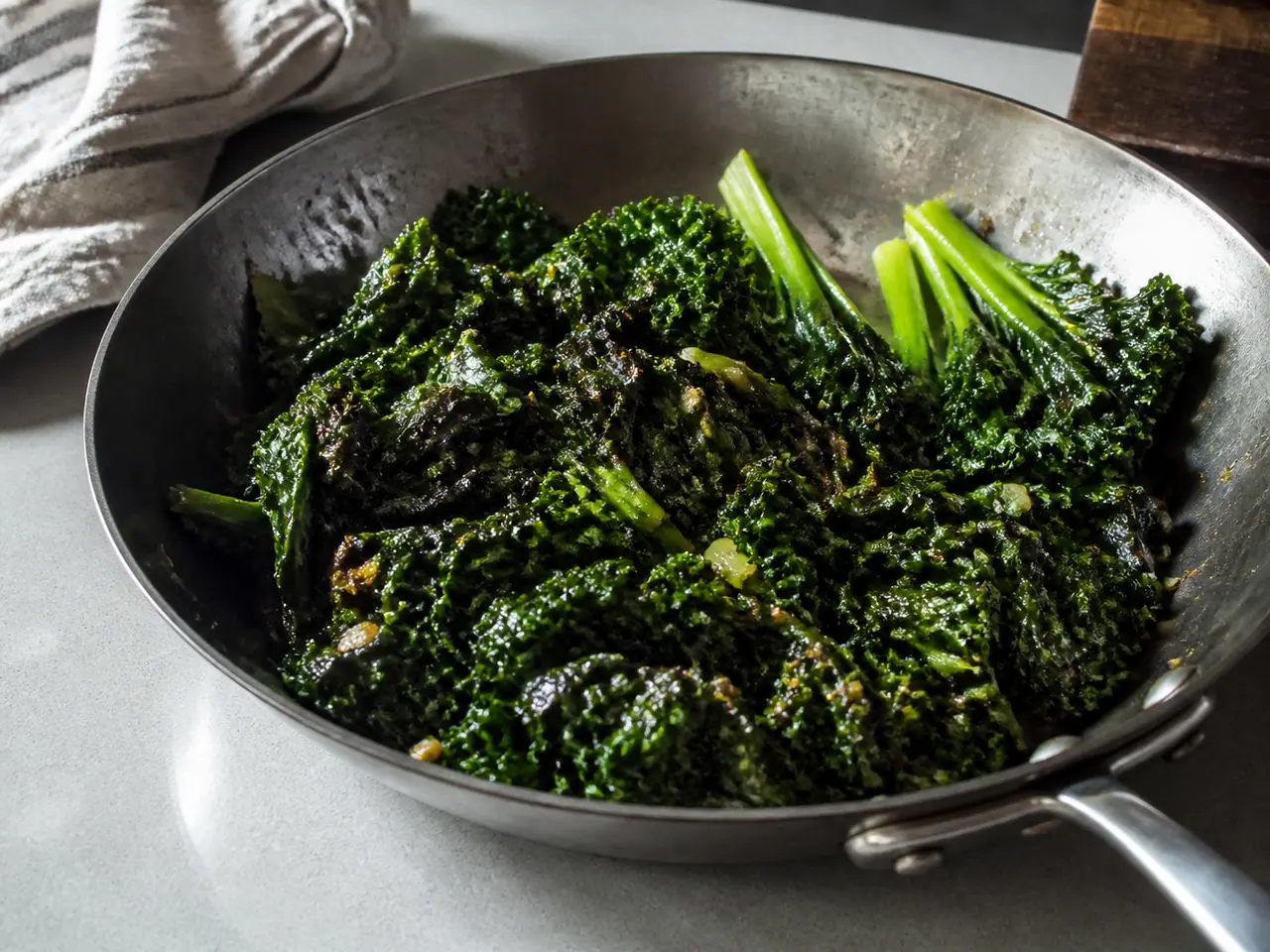
Kale can turn a vivid green in thirty seconds and still feel like a paper towel. Colour arrives quickly; tenderness does not. The thick rib and folded leaf need heat, a little moisture and enough time for the structure to soften.
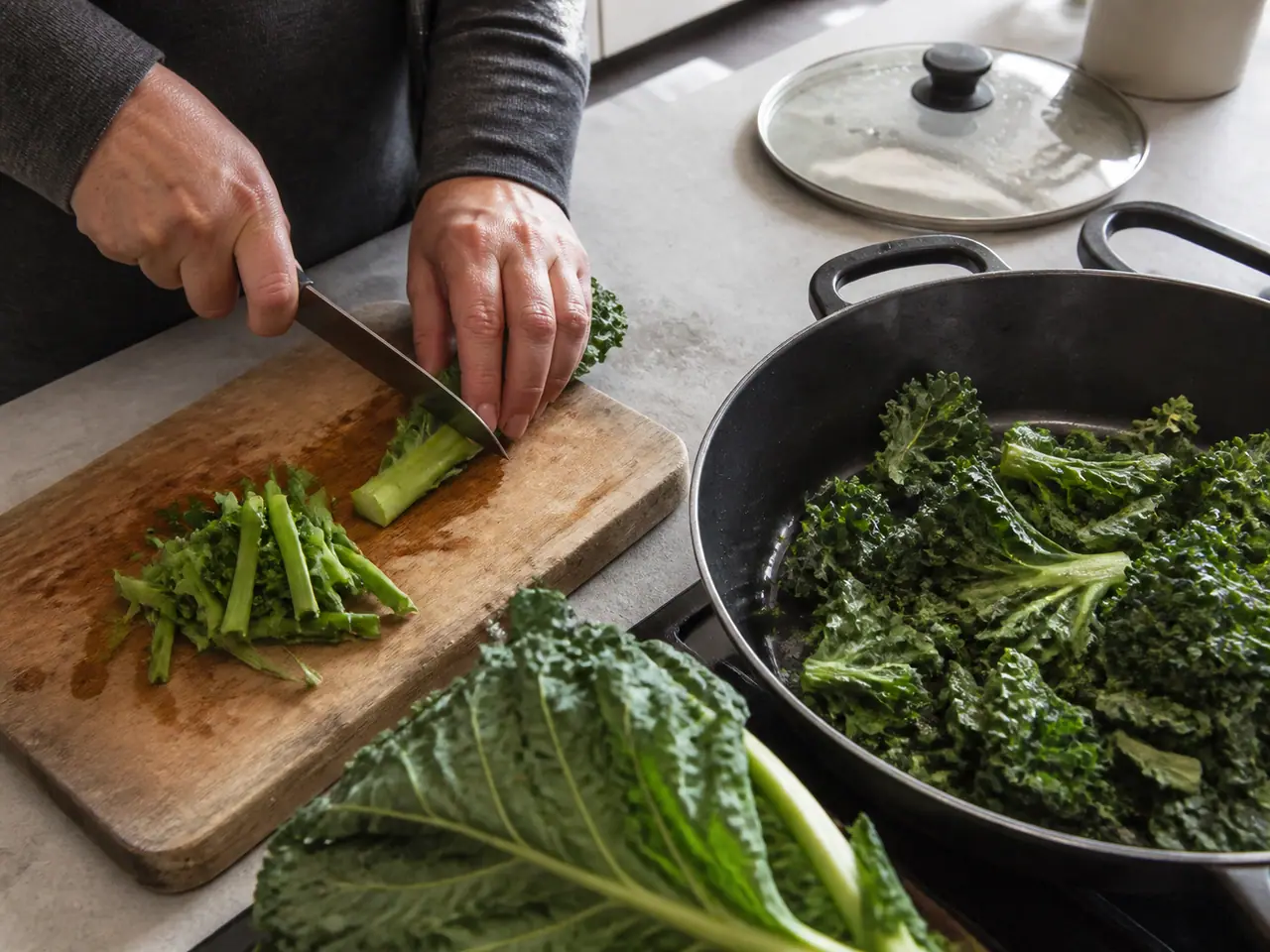
My order is strip, slice, cover, then brown. I cook the stems first, add the leaves with a splash of water and uncover only after the rib gives to a knife. A quick stir is a finish, not a full cooking method.
The rib sets the pace
A thick kale stem has more distance between its surface and centre than a baby leaf. If the rib stays attached, the leaf can look ready while the bite remains fibrous.
I slice the stems thinly on an angle and start them in oil with onion or garlic. That few minutes of head start makes the rest of the leaf much easier to time.
Folds trap dry heat
Curly kale has ridges that do not all touch the pan. A little water creates steam around the leaf and softens the folds. Without it, the exposed tips brown while the inner valleys stay stiff.
Use only a splash, not a bath. I want the steam to leave after the leaf has softened. Too much water gives boiled kale with no browned edge.
I keep one piece aside so I can compare it with the next batch.
Cover, then uncover
A lid raises the humidity and moves heat around the leaves. After a few minutes, remove it and let the remaining water evaporate. The second stage builds the flavour a covered pan cannot provide.
The exact timing depends on the leaf. Cavolo nero may need less; old curly kale may need more. A knife through the thickest rib is a better timer than the clock.
The clock helps, but the surface gives the better signal.
Acid belongs at the finish
Lemon, vinegar and tomato brighten kale but do not replace cooking. Add them once the leaves are tender, or the pan can taste sharp while the rib still resists.
Salt can arrive early enough to season the leaves, but I keep strong acid for the end. It gives the finished greens a cleaner edge.
That small pause saves more food than a rescue at the end.
Do not confuse chew with toughness
Kale should keep some body. Tender does not mean collapsed. When the leaf folds easily and the stem cuts without a squeak, I stop. More cooking can turn the edges dull and the flavour heavy.
For a soft soup texture, keep simmering. For a grain bowl, stop earlier and let the leaf carry sauce. The desired bite is part of the recipe.
The next step works better when the excess moisture has somewhere to go.
Rescue a rushed batch
If kale is browned but tough, add two tablespoons of water, cover the pan and lower the heat. Check after three minutes, then uncover and reduce the liquid.
Do not add more oil as the first rescue. Fat can coat a tough leaf without changing its structure. Steam does the softening; oil does the flavour work afterward.
I keep one piece aside so I can compare it with the next batch.
The common rescue is to add more heat, but that usually makes the outside race ahead of the centre. I lower the burner, spread the kale out and give the moisture a route to leave. If the pan is already wet, I wait for evaporation before adding oil, sauce or another handful. A calm correction preserves more texture than a dramatic one.
A different pan can solve the same problem. A wide metal skillet gives a dry surface; a covered pot gives gentle steam; a tray gives space around pieces. I choose the vessel by the failure I am trying to avoid. Kale do not need one magic temperature. They need the right balance between contact, moisture and time.
I also taste before I decide that the ingredient is the problem. A little salt, lemon or yogurt can make a naturally strong green or earthy vegetable feel balanced, but seasoning cannot repair a raw rib or a burnt edge. First fix the physical condition, then adjust flavour. That order keeps the rescue simple and keeps the original ingredient recognisable.
For the quality and storage details that sit behind my kitchen observations, I use the Colorado State Extension kale guide alongside the timed test described above.
The practical verdict
Kale needs more than a quick stir because its ribs and folds need moisture and time. Steam it briefly, then uncover for colour.
The pan should produce both tender stems and browned edges. One stage cannot do both jobs well.
Questions
How do I make kale tender in a pan?
Why is my kale still tough?
Should kale be massaged before cooking?
When should I add lemon to kale?
More guides
All guides →
Why beetroot stains everything except the flavour
Beetroot’s red-purple pigments are water-soluble enough to travel through juice, dressing and damp hands. The flavour stays earthy, so use acid, salt and creamy partners to give it shape.
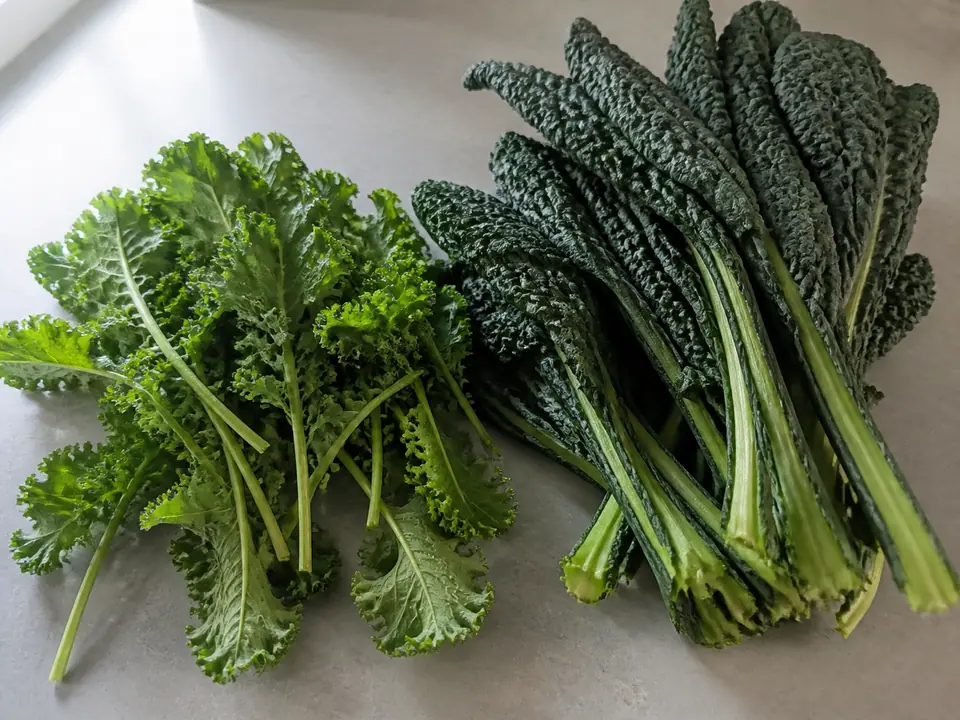
How to choose kale with tender leaves
Tender kale has fresh colour, springy leaves and stems that are not thick and woody. Choose smaller leaves for quick cooking and larger ones for soup or roasting.
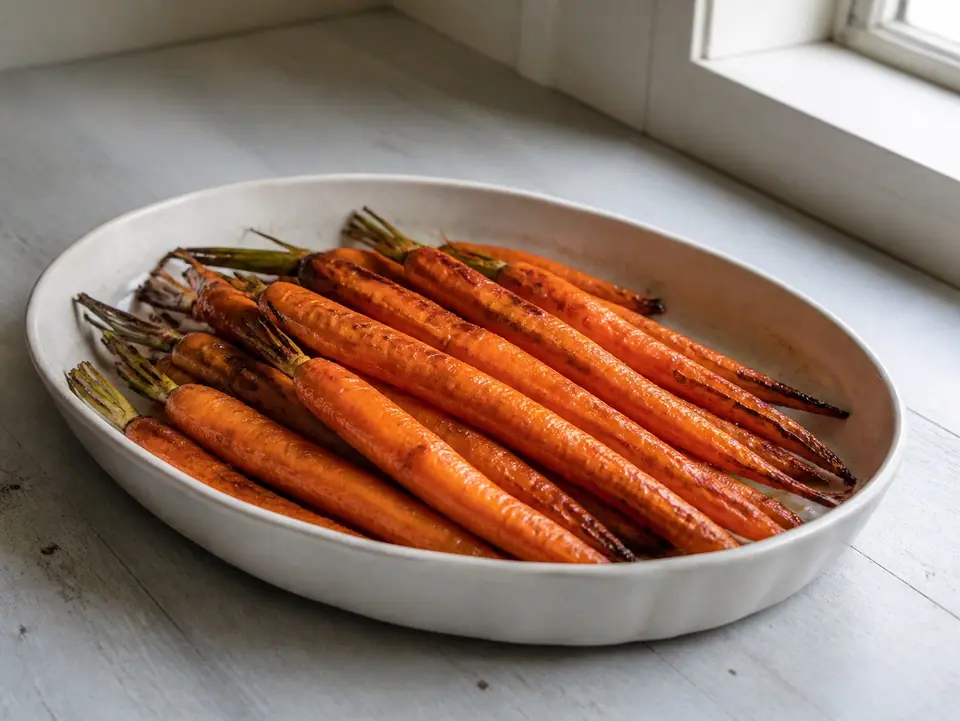
Why carrots taste sweeter after roasting
Roasting drives off water and browns the carrot surface, so its natural sweetness becomes more noticeable. The cut and tray space decide how far it goes.