A leek can look clean and still carry soil
Leeks grow by adding leaves around a central shaft, so soil can sit in the folds. Cut them before washing and let the grit sink away from the rings.

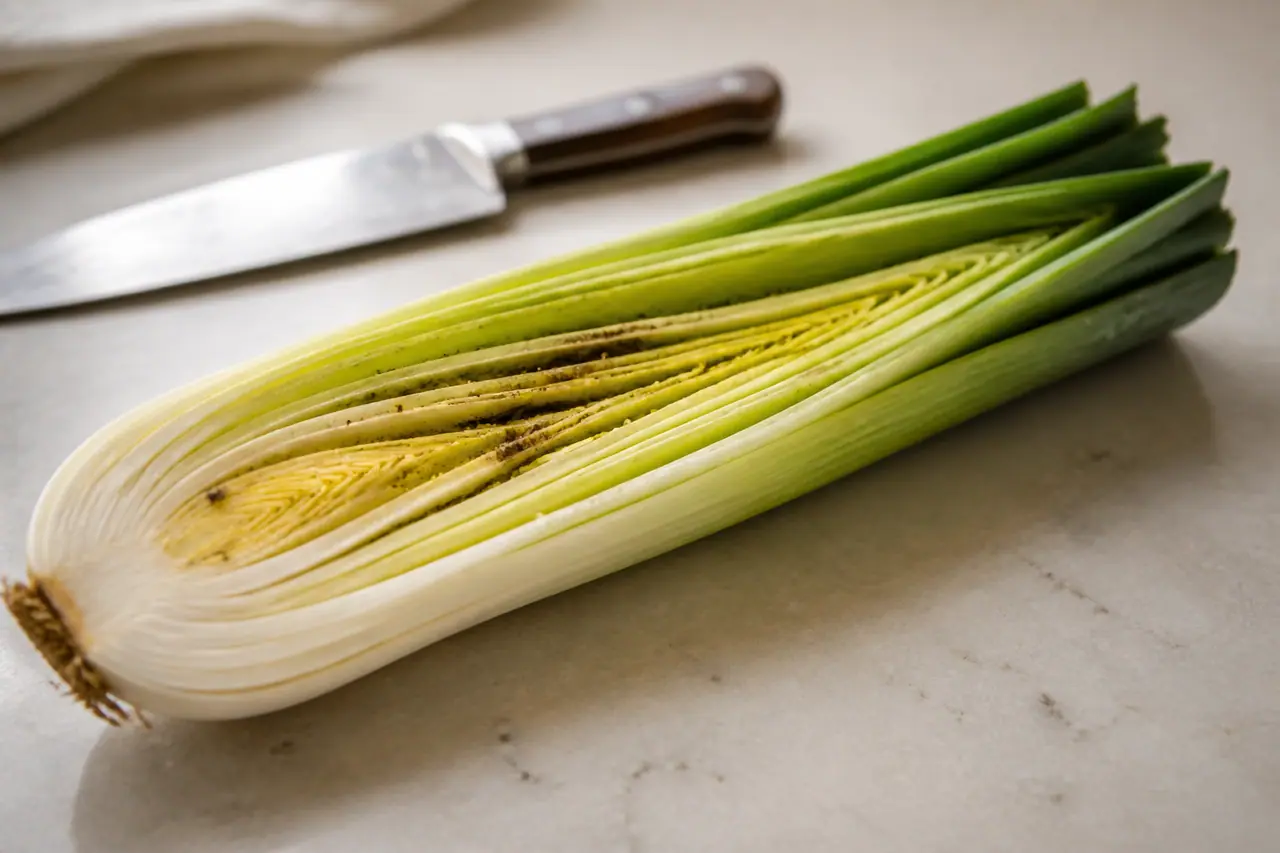
The first time I sliced a leek straight into a soup, I thought the sandy crunch came from the stock. It did not. The grit was tucked between the leaves, invisible from the outside and released as the leek softened. A leek can look bright, firm and perfectly clean while still carrying enough soil to ruin a spoonful.
One gritty spoonful is enough to change the whole bowl.
The fix is simple: cut the leek before washing it. The leaves are wrapped tightly around each other, and the plant grows by adding new layers near the centre. Soil caught between those layers does not reliably fall out under a tap. Once the leek is sliced and the rings are separated in water, the grit drops to the bottom and the clean leek floats above it.
The dirt is inside the shape, not on the surface
Leeks are blanched in the ground as they grow: soil is drawn up around the lower shaft to keep the white part pale and tender. That growing habit leaves narrow folds where fine soil can settle. The outer leaves may be dusty, but the more annoying grit often sits further in, between the white and pale green layers.
Rubbing the outside under running water cleans the wrong part. It can also push water into the folds without carrying the soil out. The Utah State University guide to leeks describes the edible sheath as a layered structure; that is the useful clue for preparation, not just a botanical detail.
The wash that actually works
- Trim the root, but leave enough of the base to keep the leaves together while you cut.
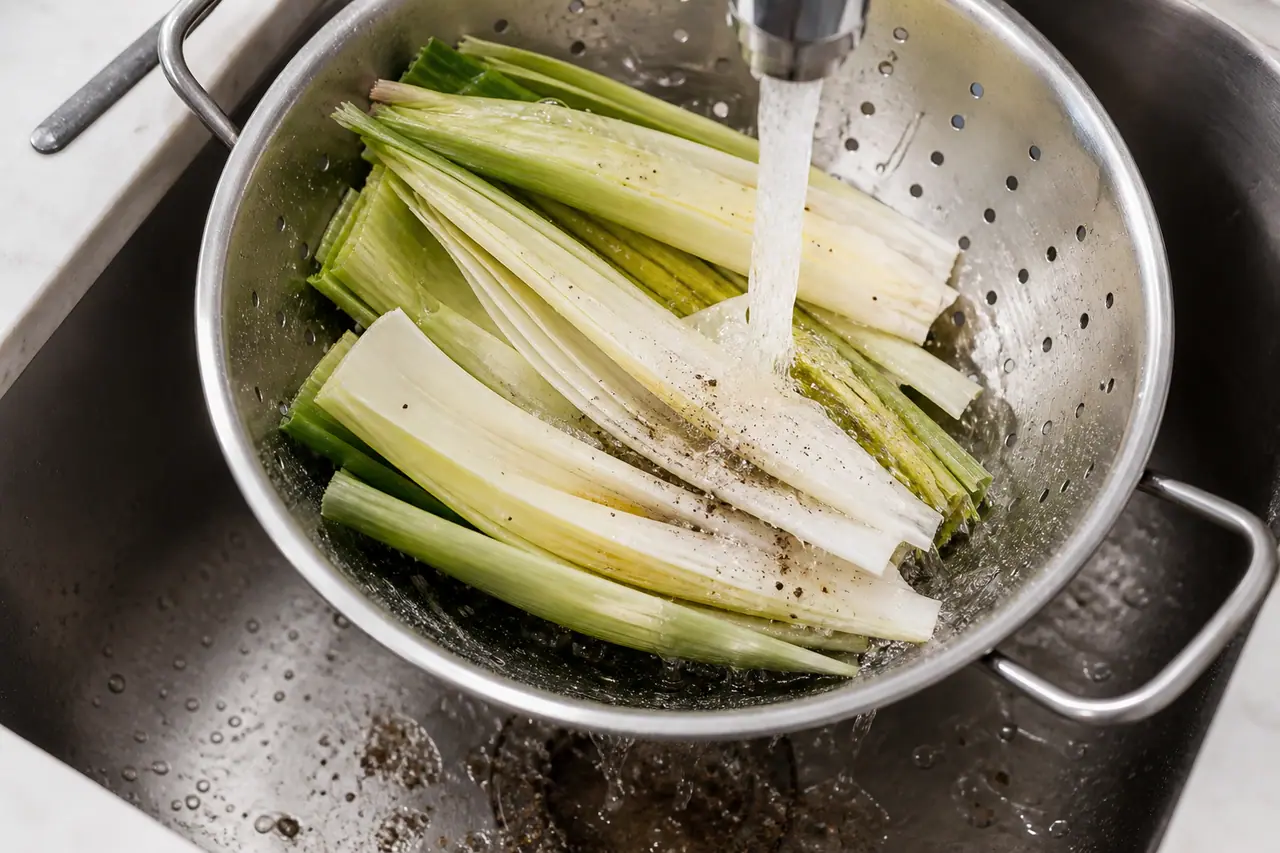
- Slice the leek lengthwise, then cut it into half-moons or shorter pieces. Keep the pieces large enough to handle.
- Drop the slices into a large bowl of cold water and move them gently with your fingers so the layers open.
- Wait a minute, then lift the leek out of the water. Do not pour the bowl through a colander, because the grit at the bottom will pass back over the clean pieces.
- Drain well and pat dry if the leek is going into a hot pan.
Why lifting matters more than rinsing
Grit is heavier than water and heavier than the leek rings, so it settles. That only helps if the clean leek is lifted away first. If you drain the whole bowl through a colander, the water carries the grit over the vegetables on its way out. I made that mistake for years because it looks like the tidy, efficient option. The bowl-and-lift method is slower by perhaps thirty seconds and much more reliable.
For a single small leek, a colander under running water is fine if you fan the layers open and rinse from several angles. For two or three leeks, use a bowl. The extra space gives the rings somewhere to move, and the soil somewhere to go.
Dry it before the pan
Clean and wet are not the same thing. If you are adding leeks to soup, the remaining water does no harm. If you want them to soften and brown in oil, drain them thoroughly and blot them with a clean towel. A wet pile cools the pan and steams instead of taking on colour. That is especially noticeable with leeks because they already contain a lot of water and collapse quickly.
I wash first, then prepare the rest of dinner while the leek drains. For a braise, I do not chase complete dryness. For a tart, skillet or roast tray, I do. The right amount of moisture depends on the job, but grit never belongs in either version.
Drying is the small pause that separates clean preparation from a watery pan.
A clean leek tastes sweeter
Washing leeks is not fussy kitchen theatre. It protects the texture of the whole dish. A sandy bite makes you notice the soil instead of the leek's soft sweetness, and one gritty spoonful can make a carefully seasoned soup feel careless. Cut them open, let the grit settle and lift the clean layers away. That is the whole method.
Questions
Should I wash leeks before or after cutting them?
Can I wash whole leeks under the tap?
Why should I lift leeks from the water instead of draining them?
Do I need to dry washed leeks?
More guides
All guides →
Why green beans go squeaky when they are undercooked
That squeaky bite means the bean is still too firm for the dish. Give it more heat and moisture, then stop as soon as the pod bends and the centre loses its raw resistance.

How to choose carrots that are crisp, not rubbery
Firm carrots with a fresh stem end and smooth, unbroken skin are more likely to stay crisp. Rubberiness means water has already left the root.

How to build a filling tofu bowl
Build the bowl around crisp tofu, then add a base, a fresh vegetable and one strong sauce. Texture and portion balance make simple ingredients feel complete.