Tomatoes
Also called fresh tomatoes
A good tomato should smell like a tomato before you cut it. Pick for scent and weight, then keep it out of the fridge until it is ripe.
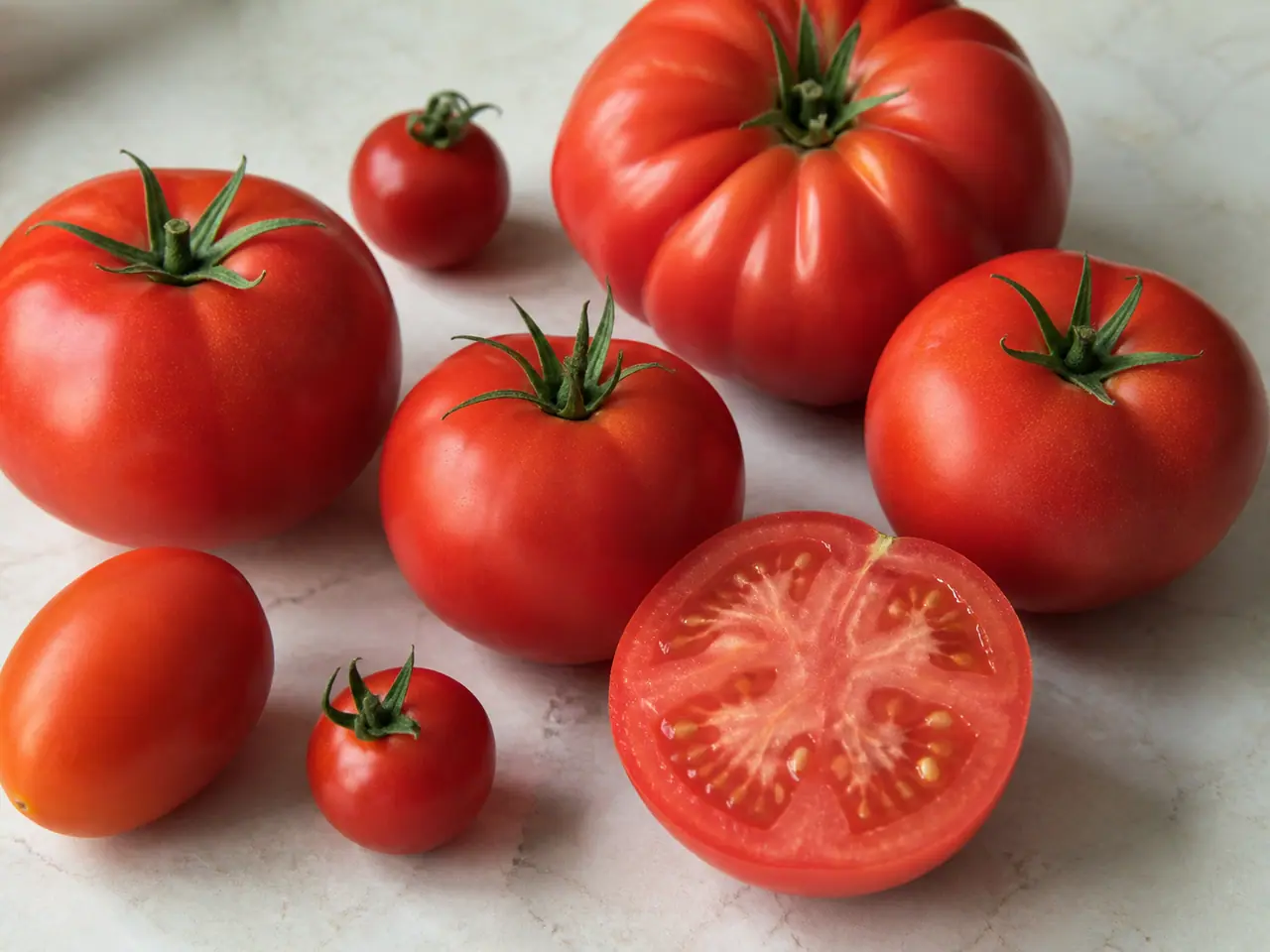
The numbers
| Nutrient | Amount | % RI |
|---|---|---|
| Calories | 18 kcal | — |
| Water | 94.5 g | — |
| Carbs | 3.9 g | — |
| Fibre | 1.2 g | 5% |
| Protein | 0.9 g | 2% |
| Vitamin C | 13.7 mg | 17% |
| Potassium | 237 mg | 12% |
Source: USDA FoodData Central, FDC 170457 (tomatoes, red, ripe, raw, year round average) · FDC ID 170457 · % RI against EU adult reference intakes.
Buying and keeping
What to look for at the shop, and how to make it last once it is home.
How to pick
- Smell the stem end. A sweet, leafy tomato smell is a better sign of ripeness than a bright red skin.
- Choose fruit that feels heavy for its size, with skin stretched smooth but not split.
- Avoid soft bruised patches, leaking cracks and a pale, woody shoulder around the stem.
- Buy several smaller tomatoes if the large ones look watery. They often have firmer flesh and better texture in a salad.
How to store
- Keep ripe tomatoes on the counter, stem side down, away from direct sun. The fridge dulls their aroma and makes the flesh mealy.
- If they are very ripe, use them within a day or two rather than refrigerating them for a week.
- Cut tomatoes belong in a covered container in the fridge and should be used within two days.
- Freeze overripe tomatoes whole for sauces. The skin will split when thawed, which is fine if they are going into a pot.
Best months
If you have none
Swaps that hold up, with what changes when you use them.
Ripeness is a smell, not a colour
Tomatoes can turn red before they develop much aroma. That is why a supermarket tomato sometimes looks ready and tastes like wet paper. Hold it near your nose, especially at the stem. If there is no smell, it may improve on the counter, but it will not become a great summer tomato by force of optimism.
There is no clever trick here, only a small piece of shopping judgement: smell the fruit before you fill the basket, then turn it in your hand and look at the shoulder, the base and any bruised points. A tomato that smells good but has a split base needs using first. A tomato that looks flawless but has no scent can still work in a roast, yet it will not suddenly become fragrant in a cold salad. The shop is where you make that decision, not the chopping board.
Weight helps too. A heavy tomato has more juice and usually a fuller interior. That is useful for chopping over toast, though a very juicy fruit can make a pan sauce take longer to reduce. For a salad I want a little give and a strong smell. For roasting I am happy with firmer fruit because the oven will do the softening. Weight also tells you how much water you may be bringing into the pan. A dense fruit can be cut and cooked quickly; a loose, heavy fruit may need a wide tray or a longer reduction. I do not treat either as a fault. I use the dense ones raw and the juicy ones where their liquid has somewhere useful to go.
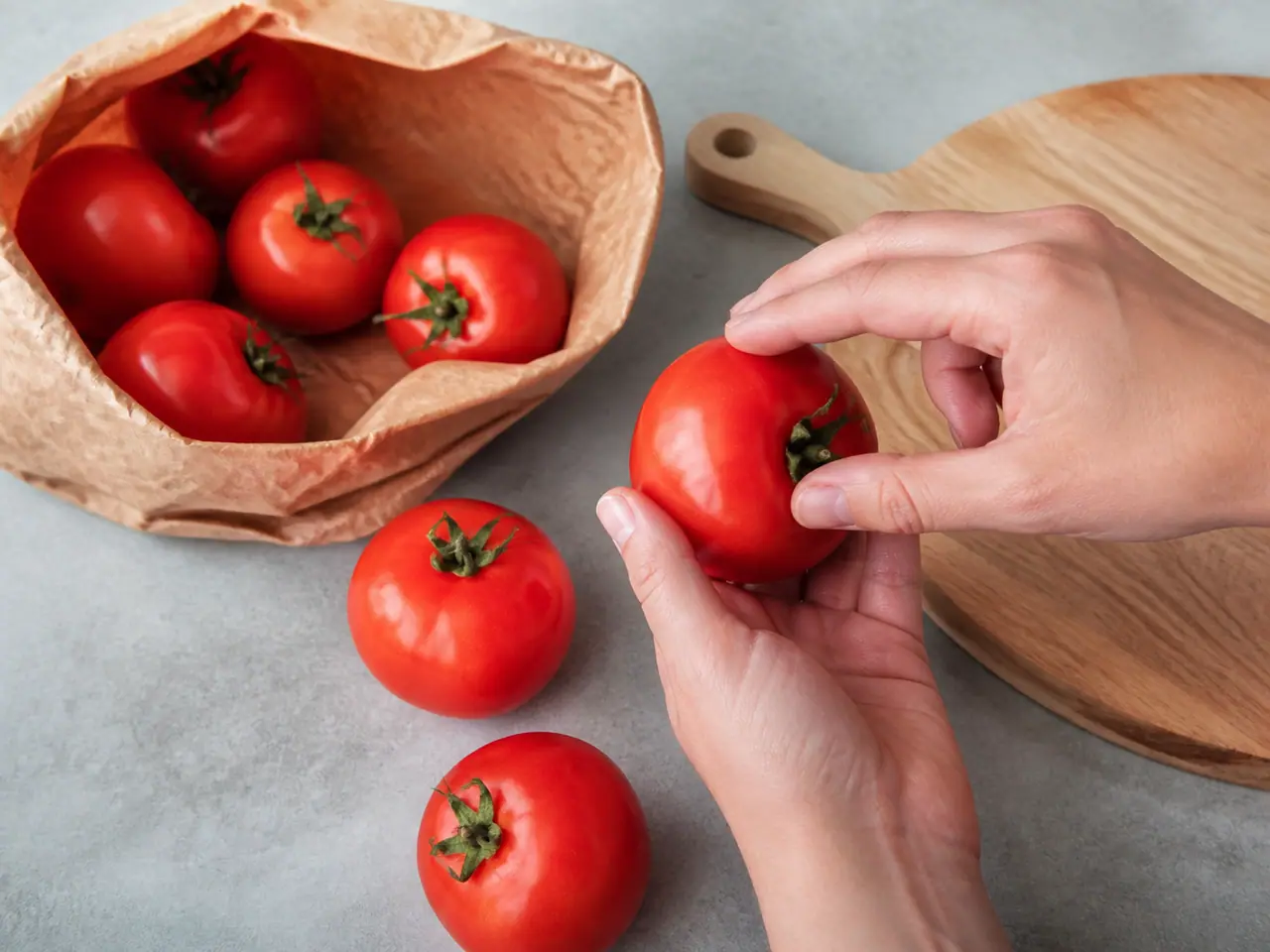
Why the fridge is usually the wrong place
Cold storage slows the aroma compounds that make a ripe tomato taste like itself. It also changes the texture. The flesh becomes softer in an unpleasant, cottony way, especially after the tomato comes back to room temperature. A cool pantry is fine, but a cold shelf is not a quality upgrade.
There is one practical exception. Once a tomato is cut, the fridge wins because it slows spoilage. Put the cut side against the base of a small container, cover it, and use it soon. Do not leave half a tomato uncovered beside an onion for three days; it will pick up the onion smell and lose the clean acidity you wanted. I keep cut tomatoes away from uncovered dairy and strong leftovers for the same reason. The flesh absorbs nearby smells quickly, and a tomato that should taste of summer can end up tasting of the fridge. Bring it out ten minutes before serving if you are using it raw. Cold dulls the aroma, while a little time on the counter lets the acidity and sweetness show again.
Raw, roasted or reduced
Fresh tomatoes have three useful jobs. Raw, they bring juice and lift. Roasted, they lose water and gain sweetness at the edges. Reduced in a wide pan, they become a sauce, but only after the water has somewhere to go. A narrow saucepan with a lid will steam them rather than concentrate them.
Salt timing changes the result. Salt a salad just before eating when you want pieces to keep their shape. Salt a sauce early when you want the juices to leave and season the whole pan. The same fruit can therefore be crisp at lunch and soft in a pasta sauce at dinner. I salt chopped tomatoes at the table when the pieces are going onto toast, because the bread can catch the juice and the fruit should still look like fruit. In a sauce I salt with the onion or the first tomato addition, then taste again after reduction. That way the salt travels through the liquid instead of sitting on the surface. The method is the same tomato; the timing decides whether the result is a clean piece or a seasoned base.
Links worth following
For the difference between fresh and tinned fruit, read fresh tomatoes vs tinned tomatoes. The buying details are in how to choose ripe tomatoes, and the storage version is how to keep tomatoes fresh. I use those guides alongside the recipes rather than pretending one tomato behaves the same in every pan.
Questions
Should tomatoes go in the fridge?
How can I ripen tomatoes?
Why are my tomatoes watery in a sauce?
Can I freeze fresh tomatoes?
Are canned tomatoes healthier than fresh tomatoes?
Recipes using tomatoes
2 on the site so far.
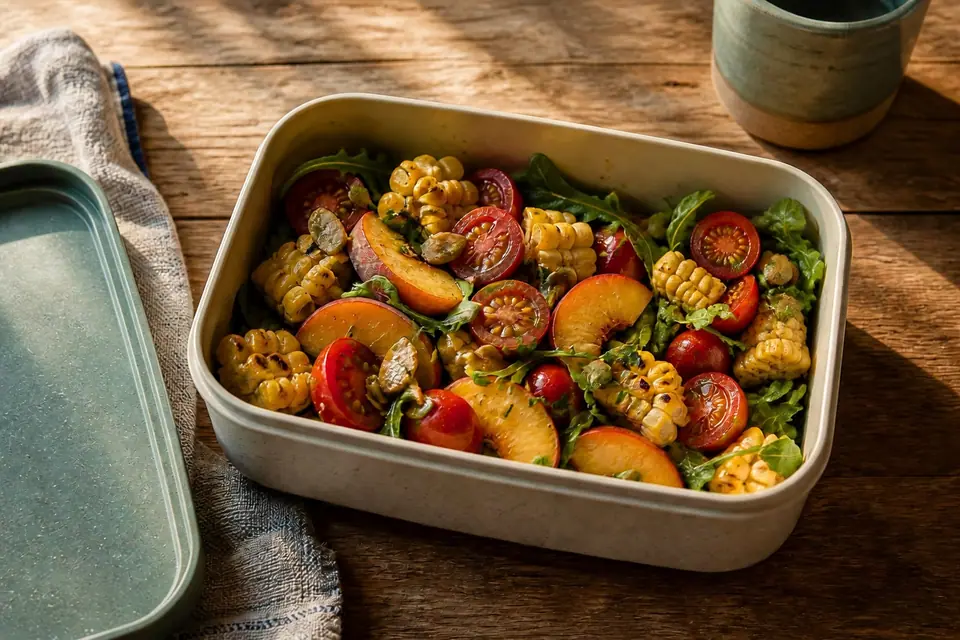
Charred corn, tomato and peach salad for a packed lunch
The salad travels well because the dressing, herbs and toasted seeds stay in their own corners until lunch. No soggy leaves, no leaking fruit.
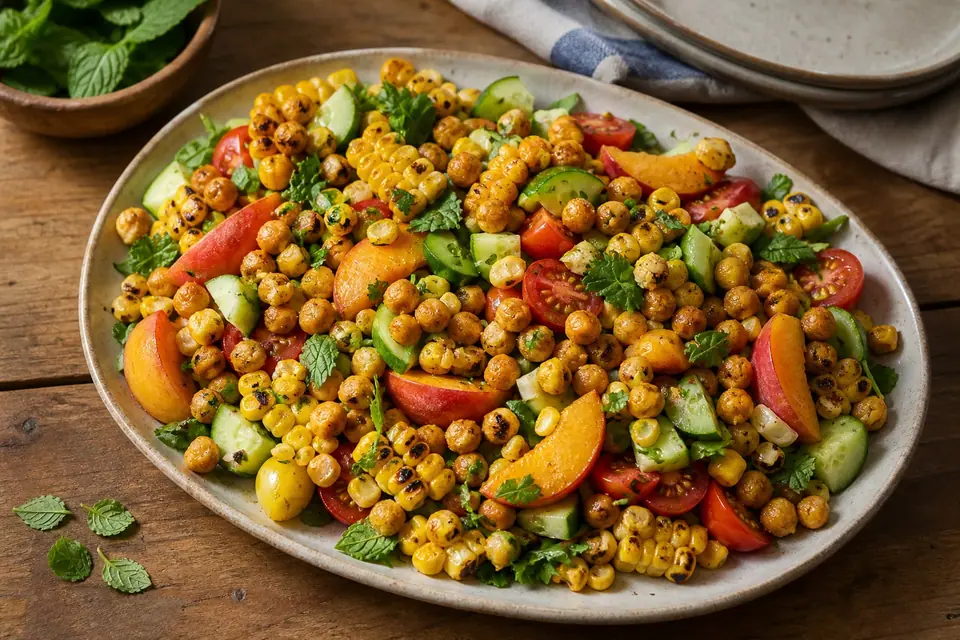
Charred corn, tomato and peach salad with crispy chickpeas
Sweet late-summer produce with chickpeas roasted until their edges crackle. The salad stays fresh while the chickpeas bring the substance.
Guides about tomatoes
All guides →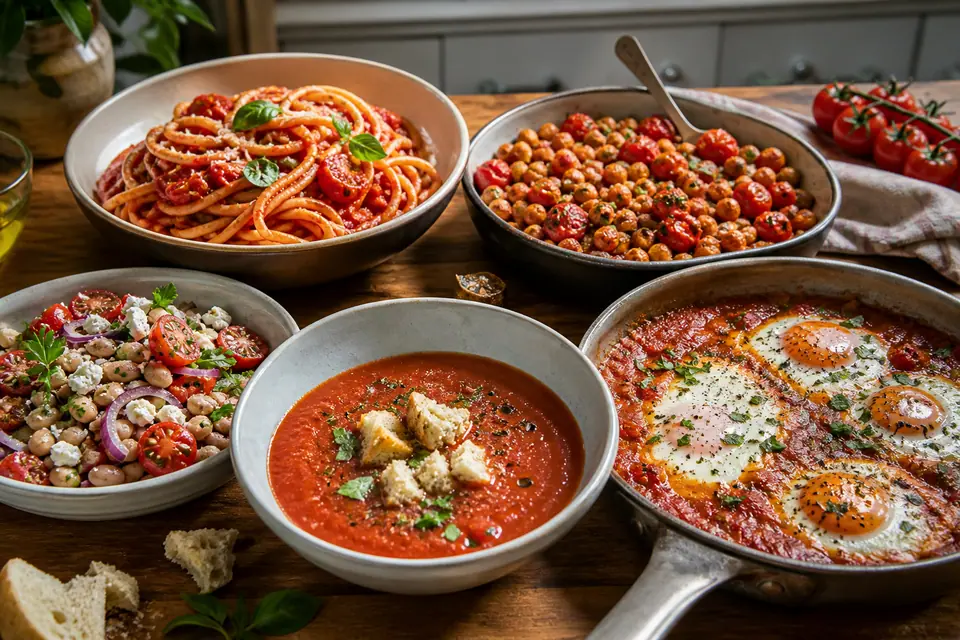
5 dinners for a glut of fresh tomatoes
Use a glut of fresh tomatoes in a wide-pan sauce, roast tray, tomato eggs, soup or a bread topping. Match the method to how ripe they are.
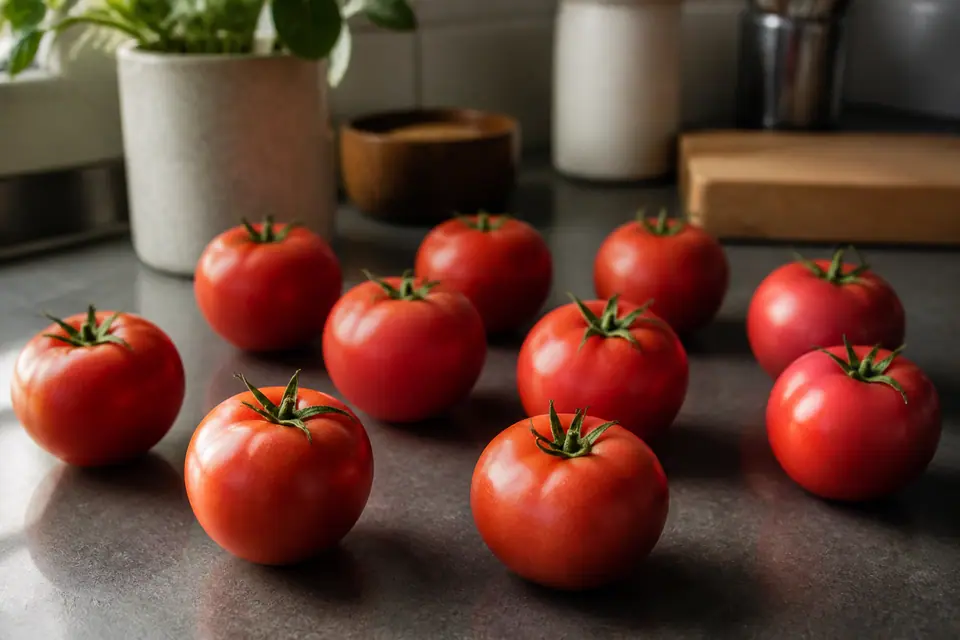
How to keep tomatoes fresh without ruining them
Keep whole tomatoes at room temperature while they ripen, away from sun and bruises. Chill only when slowing an already ripe tomato is worth the texture trade.
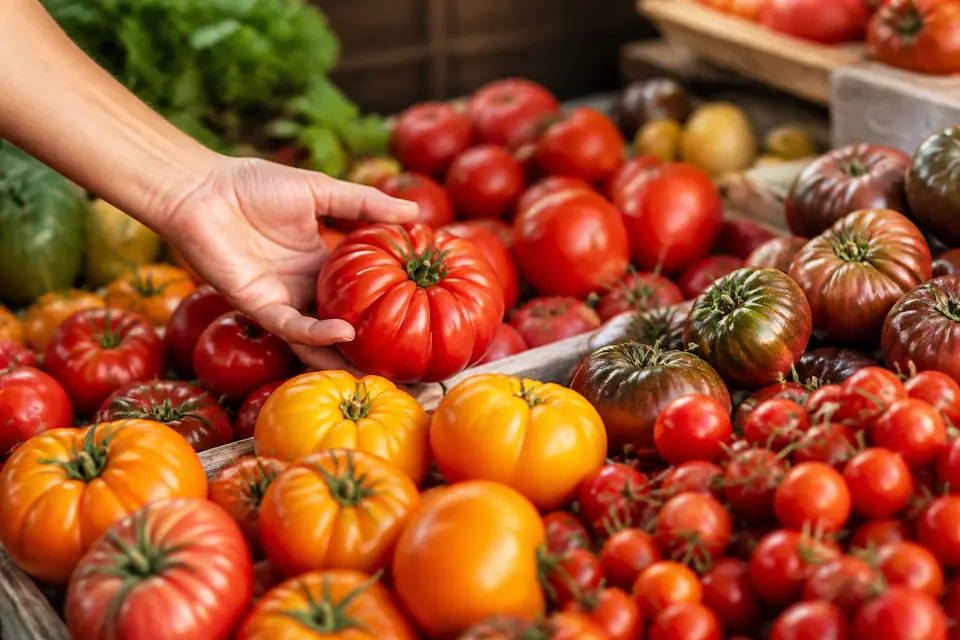
How to choose ripe tomatoes that actually taste of tomato
Choose tomatoes with a real stem scent, a little give and weight for their size. Colour helps, but it cannot replace aroma and texture.
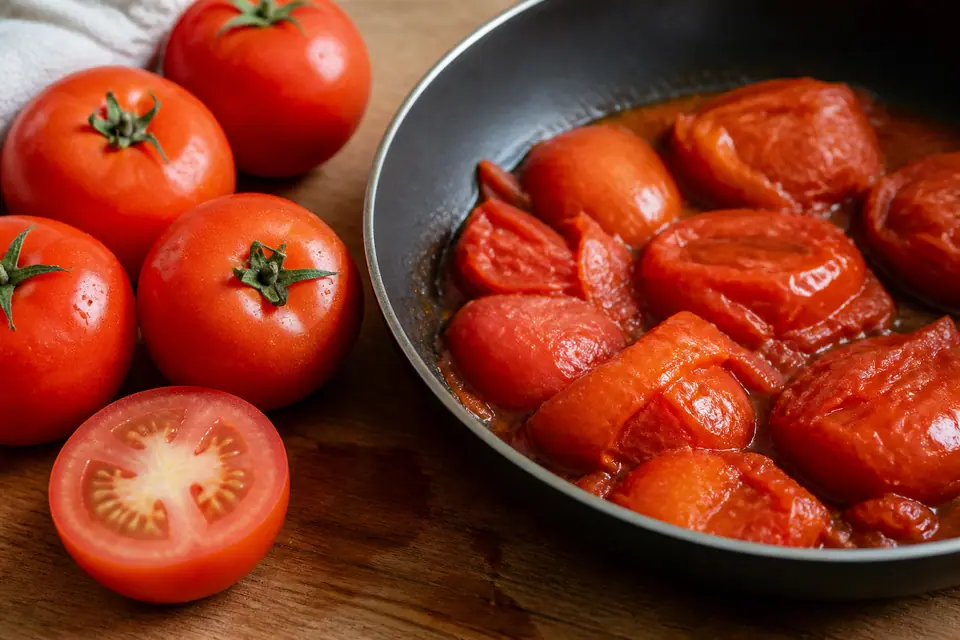
Why some supermarket tomatoes never soften properly
Some tomatoes are picked for transport rather than immediate flavour. Their skin may colour while the flesh stays firm, pale and watery.
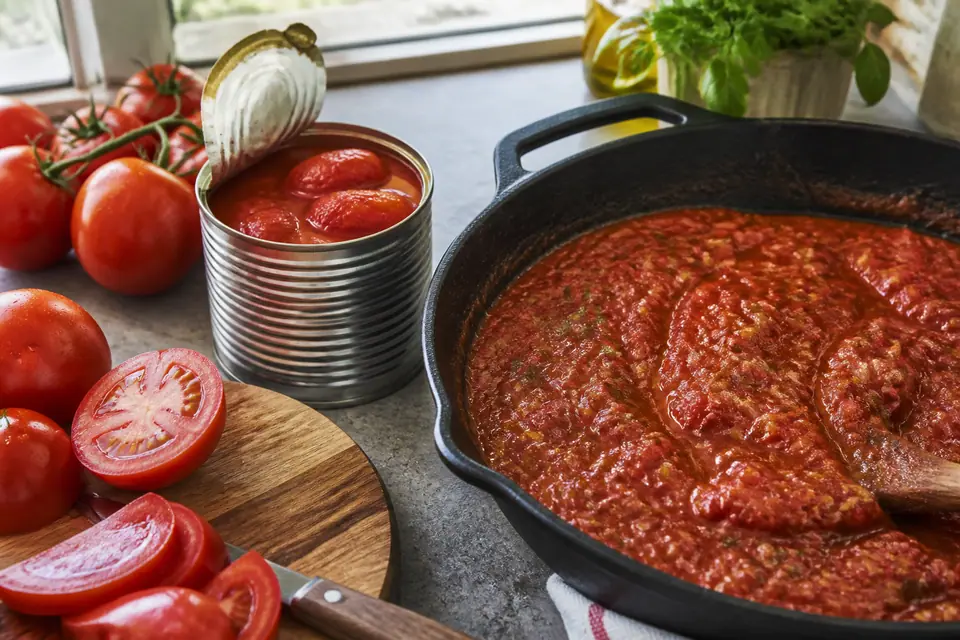
Fresh tomatoes vs tinned: which is better for dinner?
Fresh tomatoes win when you want brightness and a short cook. Tinned tomatoes win when you need a dependable sauce, stew or soup all year.