Smell the stem, check the weight, and stop trusting colour alone
Choose tomatoes with a real stem scent, a little give and weight for their size. Colour helps, but it cannot replace aroma and texture.

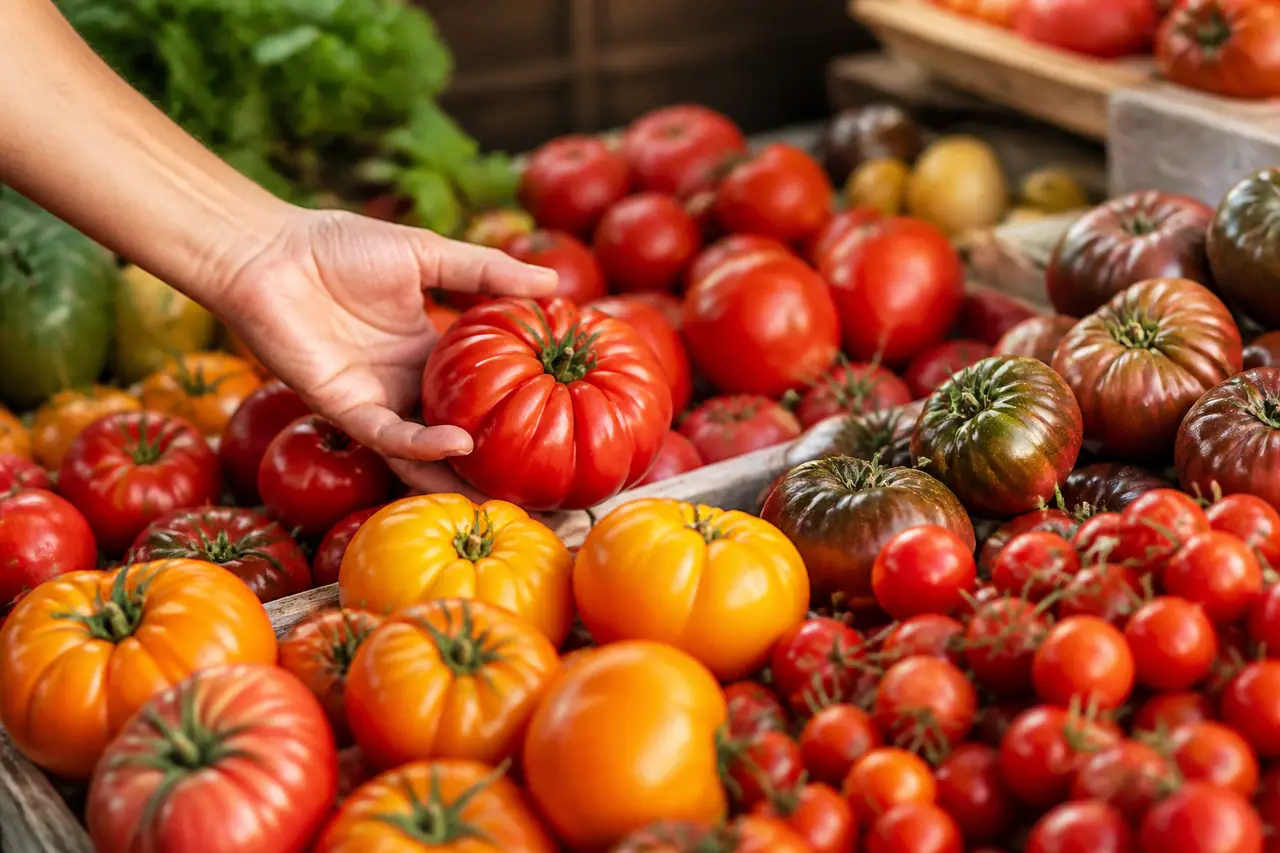
A ripe tomato should give you a reason to eat it before it reaches the pan. It should smell faintly sweet near the stem, feel heavy for its size and yield a little under a gentle press. Colour is useful, but it is only one clue. A bright red tomato can be bland, while a striped, orange or deep purple variety can be fully ripe and full of flavour. I also look at the skin around the shoulder: a little natural variation is fine, but a dull, tight surface often belongs to fruit that has spent too long travelling.
I choose tomatoes differently for a salad and for a sauce. For eating raw, I want aroma, tenderness and a skin that feels taut rather than tough. For roasting, I can accept a firmer fruit as long as it has weight and a clean smell. The shop decision gets easier when the cooking job is clear.
The stem end tells you more than the shine
Hold the tomato near your nose and smell the stem end. A ripe tomato has a green, sweet and recognisable tomato scent. If there is no smell at all, it may have been picked before its flavour developed, even if the skin is perfectly red. If the smell is sour or fermented, the fruit is past its best. This test is quick, discreet and more useful than choosing the shiniest tomato in the box.
Next, lift it. It should feel heavy for its size, which suggests that the flesh has not dried out. Weight is not a promise of sweetness, but a light tomato with a thick, dull skin is rarely the one I want for a raw plate. I compare fruit of the same type because a small plum tomato and a large beefsteak will never feel identical in the hand. If the choice is between a fragrant tomato with one odd mark and a flawless tomato with no smell, I take the fragrant one and use it sooner.
Firmness depends on when you will cook
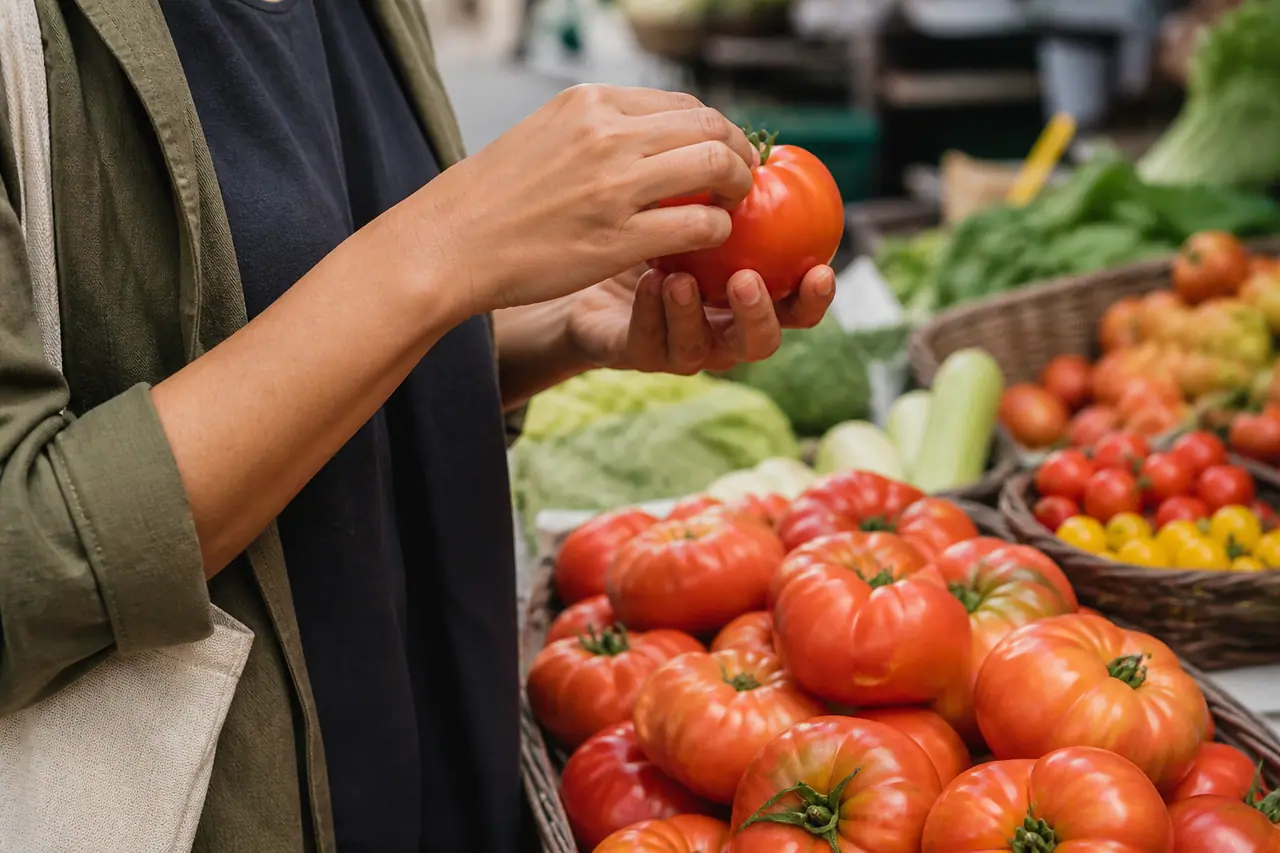
For tonight's salad, choose a tomato with a little give around the shoulder and no soft collapse near the base. It should slice cleanly but release juice when cut. For tomorrow, choose one that is firm yet fragrant and let it sit at room temperature. For roasting, a firmer tomato can be helpful because it keeps its shape while the edges colour. The best fruit is not always the softest fruit.
Avoid pressing every tomato in a box. One hard squeeze creates a bruise that spreads while the fruit waits at home. Use your fingertips lightly and inspect the skin for splits, leaking spots or bruises. A small healed scar is not automatically a problem, but a wet crack is an invitation for the fruit to deteriorate quickly.
| You are making | Choose | Look for |
|---|---|---|
| Raw salad | Fragrant and gently yielding | Strong stem smell and taut skin |
| Toast topping | Soft but not collapsing | Weight and juicy flesh |
| Roasted tray | Firm, dense fruit | No leaks or bruises |
| Quick sauce | Ripe fruit with some give | Aroma, not just red colour |
| Later in the week | Firm and fragrant | No hard green shoulder |
Source: Maren Ashby's produce-shop test, 2026-01-13
Variety changes the answer
Cherry and grape tomatoes often have a higher skin-to-flesh ratio, so I look for firm skins and a sweet smell. Plum tomatoes can be useful for sauces because they are meaty, but they still need to smell ripe. Large slicing tomatoes are good when you want broad juicy pieces, yet they can become watery if the fruit has been picked too early.
Do not treat a tomato label as a flavour guarantee. Names such as vine-ripened, local or heirloom tell you something about how the fruit was marketed, not exactly how it will taste in your kitchen. Use the label to narrow the choice, then use your nose, hand and eyes to make the final decision. A local tomato can have travelled less and still have been picked too early; an heirloom tomato can taste wonderful and bruise on the way home. Buy for the dinner you can make today, not for the story on the sticker.
The verdict
Choose ripe tomatoes by smell, weight and gentle firmness, then use colour and variety as supporting clues. Match the softness to the dinner you are making, and never confuse a glossy skin with flavour. A tomato that smells good in the shop will usually give you more to work with at home than one chosen only because it looks red.
Questions
How can I tell if a tomato is ripe?
Should ripe tomatoes be soft?
Can tomatoes ripen on the counter?
Are vine tomatoes always better?
Ingredients in this guide
More guides
All guides →
How to choose carrots that are crisp, not rubbery
Firm carrots with a fresh stem end and smooth, unbroken skin are more likely to stay crisp. Rubberiness means water has already left the root.
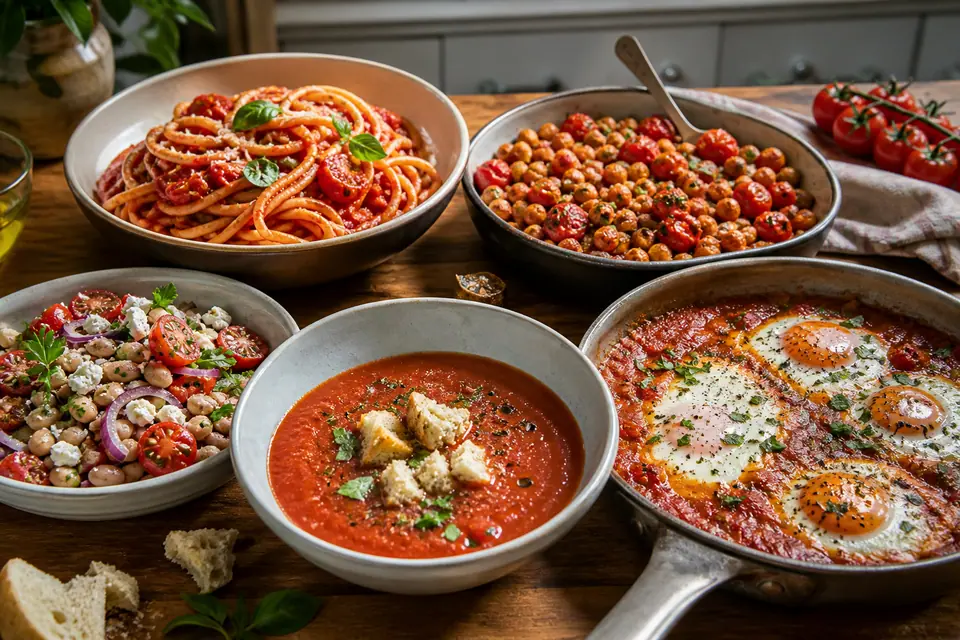
5 dinners for a glut of fresh tomatoes
Use a glut of fresh tomatoes in a wide-pan sauce, roast tray, tomato eggs, soup or a bread topping. Match the method to how ripe they are.

Cauliflower vs broccoli: which roasts better?
Cauliflower gives a more even roast and creamy centre. Broccoli browns faster and has better crisp tips, so the winner depends on the texture you want.