A pile of ripe tomatoes wants heat, bread and a wide pan
Use a glut of fresh tomatoes in a wide-pan sauce, roast tray, tomato eggs, soup or a bread topping. Match the method to how ripe they are.

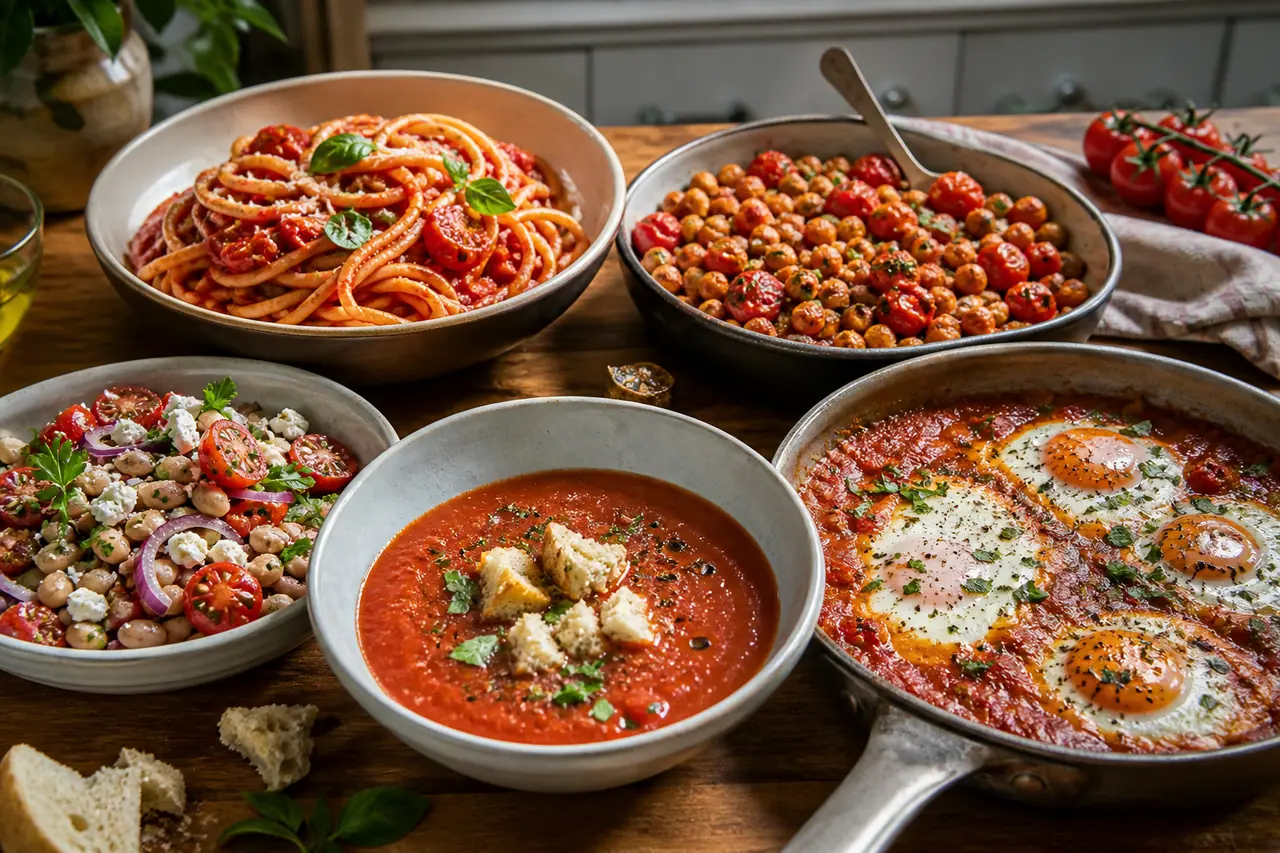
A glut of tomatoes becomes stressful only when every tomato is treated as a salad ingredient. Ripe fruit can be roasted, simmered, blended, folded into eggs or piled on bread. The best dinner depends on the tomato's condition. Firm fruit can hold a roast tray, soft fruit can make a quick sauce, and very ripe fruit should be cooked today rather than asked to wait for a perfect recipe. Sorting the pile first is half the work: the softest fruit gets the pot, while the firmest can handle the oven.
These five ideas use ordinary cupboard ingredients and keep the tomatoes visible. You do not need to peel every tomato or reduce every pan for hours. Give the fruit a wide cooking surface, taste before adding sugar and let the juices decide how much extra liquid the dinner needs.
1. Wide-pan tomato and garlic pasta
Chop ripe tomatoes and put them in a wide pan with olive oil, garlic and a little salt. Cook uncovered until the juice becomes a loose sauce, then toss through pasta with basil, parsley or grated cheese. The wide pan matters because it lets water leave without making the tomatoes stick in a deep layer. Keep some pieces intact so the pasta gets both sauce and soft fruit.
If the tomatoes are very watery, cook them before the pasta goes in. If they are meaty and ripe, add the pasta sooner and use a little pasta water to bring everything together. A spoonful of tomato paste is optional, not automatic; taste the fresh tomatoes first.
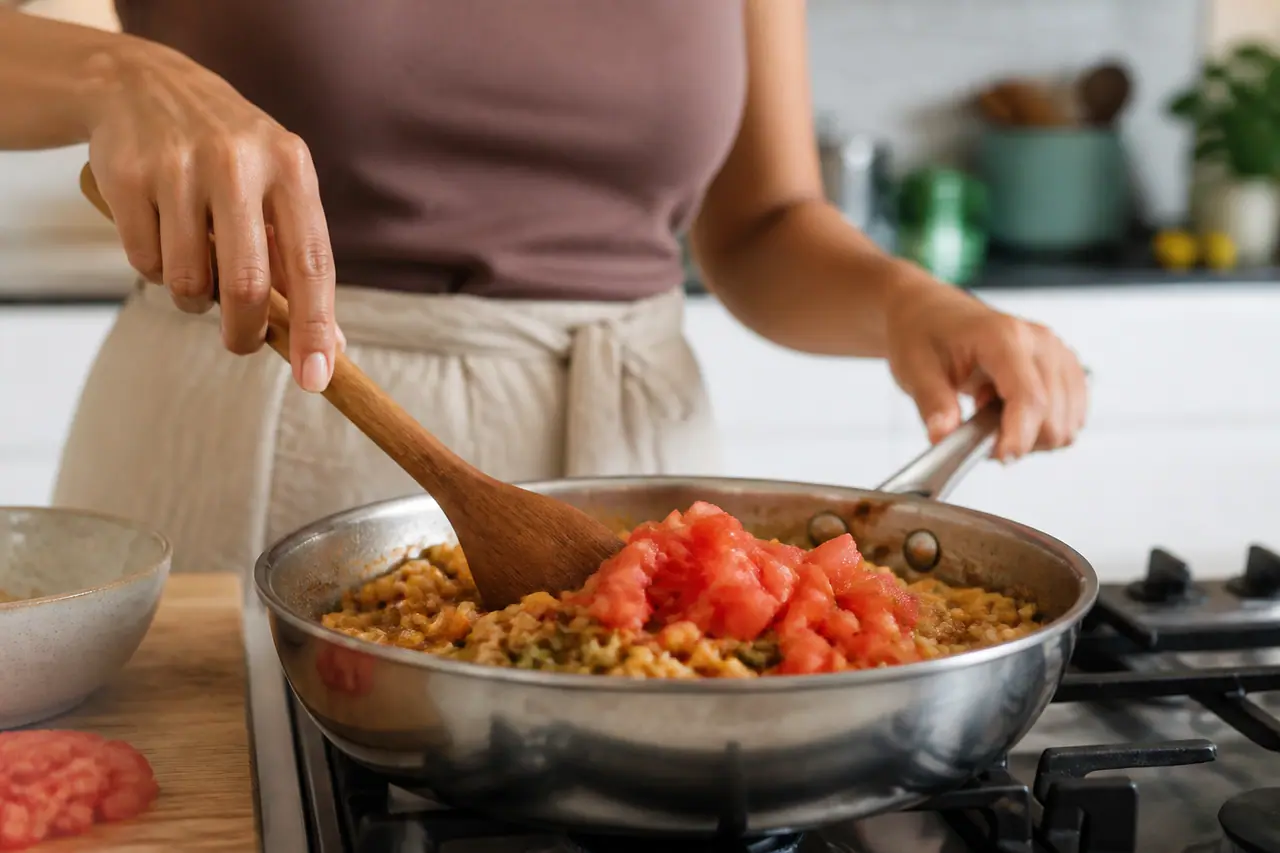
2. Roast tomatoes with chickpeas
Halve or quarter the tomatoes, toss them with chickpeas, onion, olive oil and spices, then roast until the edges darken and the chickpeas become crisp. The tomatoes release enough juice to make a rough sauce around the beans while the oven concentrates the flavour. Serve with yoghurt, grains or bread to catch the tray juices.
Use firm tomatoes if you want distinct pieces and soft tomatoes if you want a more jammy tray. Turn the chickpeas once, but do not disturb the tomatoes too much. The edges need time against the hot tray to develop colour. If the tomatoes are different sizes, cut the large ones smaller rather than extending the whole roast. That keeps the soft fruit from disappearing while the firm pieces are still waiting to catch.
3. Tomato eggs with herbs
Cook chopped tomatoes with onion, garlic and chilli until the liquid thickens enough to hold eggs. Make hollows, crack in the eggs and cover the pan until the whites set. Add herbs at the end so their fresh smell survives the heat. Toasted bread is all the side dish this needs.
This is a good use for tomatoes that are too soft to slice neatly. Let them break down on their own and keep the seasoning modest until the sauce has reduced. If the pan stays watery, uncover it and give the tomato more time before the eggs go in.
4. Cold tomato and bean bowls
For the least cooking, chop ripe tomatoes with white beans, cucumber, herbs and toasted bread. Dress with olive oil, vinegar and salt before eating. The tomatoes supply the dressing as their juices run into the bowl. Add tuna, feta or a boiled egg if you want more protein. This bowl is also a good place for tomatoes that are soft but still fragrant. Cut away any bruised spot, keep the pieces fairly large and let the beans absorb the juices for a few minutes before you decide whether the dressing needs more acid.
Keep the bread separate until serving if you prefer crunch. If the tomatoes are particularly juicy, let them sit with the beans for a few minutes and taste again before adding more vinegar. The acidity you need depends on how sweet and ripe the fruit is.
5. Fast tomato soup
Cook the tomatoes with onion, carrot and garlic, add enough stock to cover, then blend until smooth or leave it rustic. Fresh tomatoes make a lighter soup than tins, so finish with olive oil, yoghurt, white beans or croutons. A little butter at the end can soften an acidic edge without making the soup sweet.
Roast the tomatoes first if they are firm or lack aroma. If they are already soft and fragrant, the pot is quicker and keeps more of their fresh character. Do not add a lot of stock at the beginning; you can always loosen a thick soup, but reducing a thin one takes time.
The useful ending for too many tomatoes
Use the wide pan for pasta, the oven for chickpeas, the skillet for eggs, the bowl for beans and the pot for soup. These methods do not ask fresh tomatoes to behave like tins. They let the ripe fruit keep its brightness while giving the excess a practical dinner to become.
Questions
What can I make for dinner with lots of fresh tomatoes?
How do I use very soft tomatoes?
Can I freeze fresh tomatoes for later?
How do I thicken fresh tomato sauce?
Ingredients in this guide
More guides
All guides →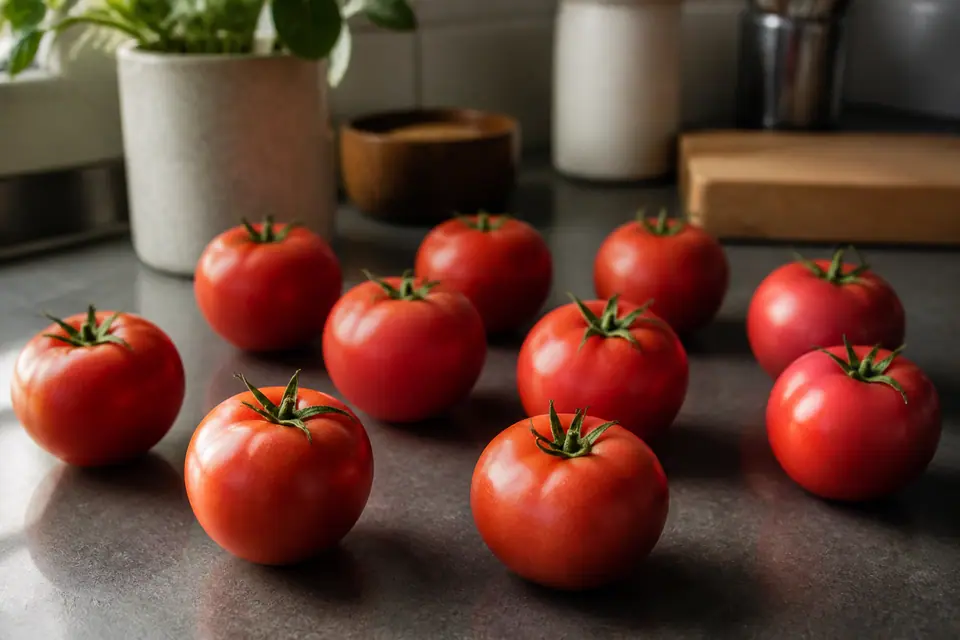
How to keep tomatoes fresh without ruining them
Keep whole tomatoes at room temperature while they ripen, away from sun and bruises. Chill only when slowing an already ripe tomato is worth the texture trade.
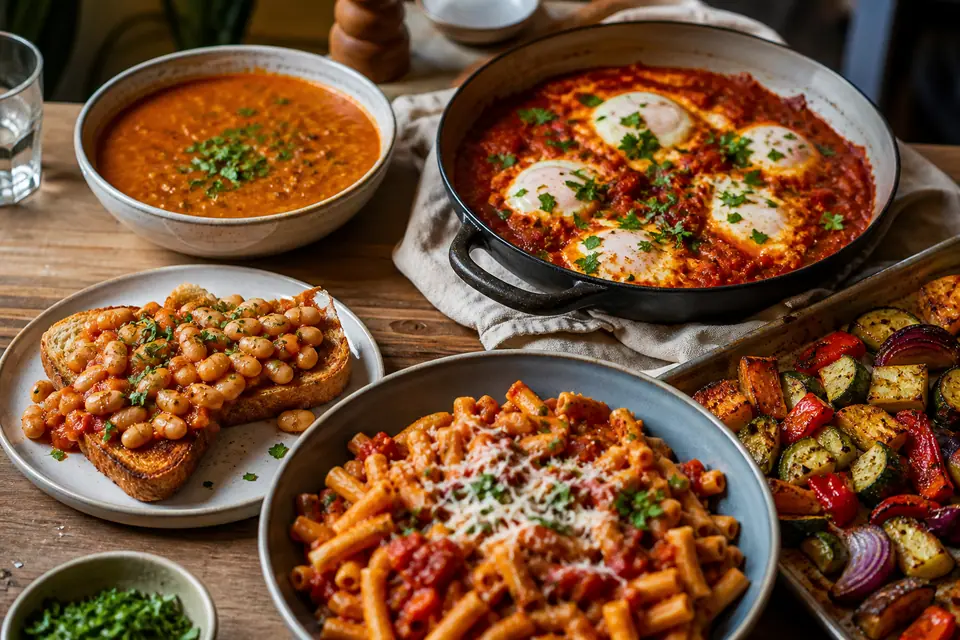
5 dinners that use one spoonful of tomato paste
Use the last spoonful of tomato paste in beans, eggs, lentils, pasta or roasted vegetables. Each idea gives it a clear job instead of leaving it in the fridge.

How to choose carrots that are crisp, not rubbery
Firm carrots with a fresh stem end and smooth, unbroken skin are more likely to stay crisp. Rubberiness means water has already left the root.