A tomato can be red outside and unfinished inside
Some tomatoes are picked for transport rather than immediate flavour. Their skin may colour while the flesh stays firm, pale and watery.

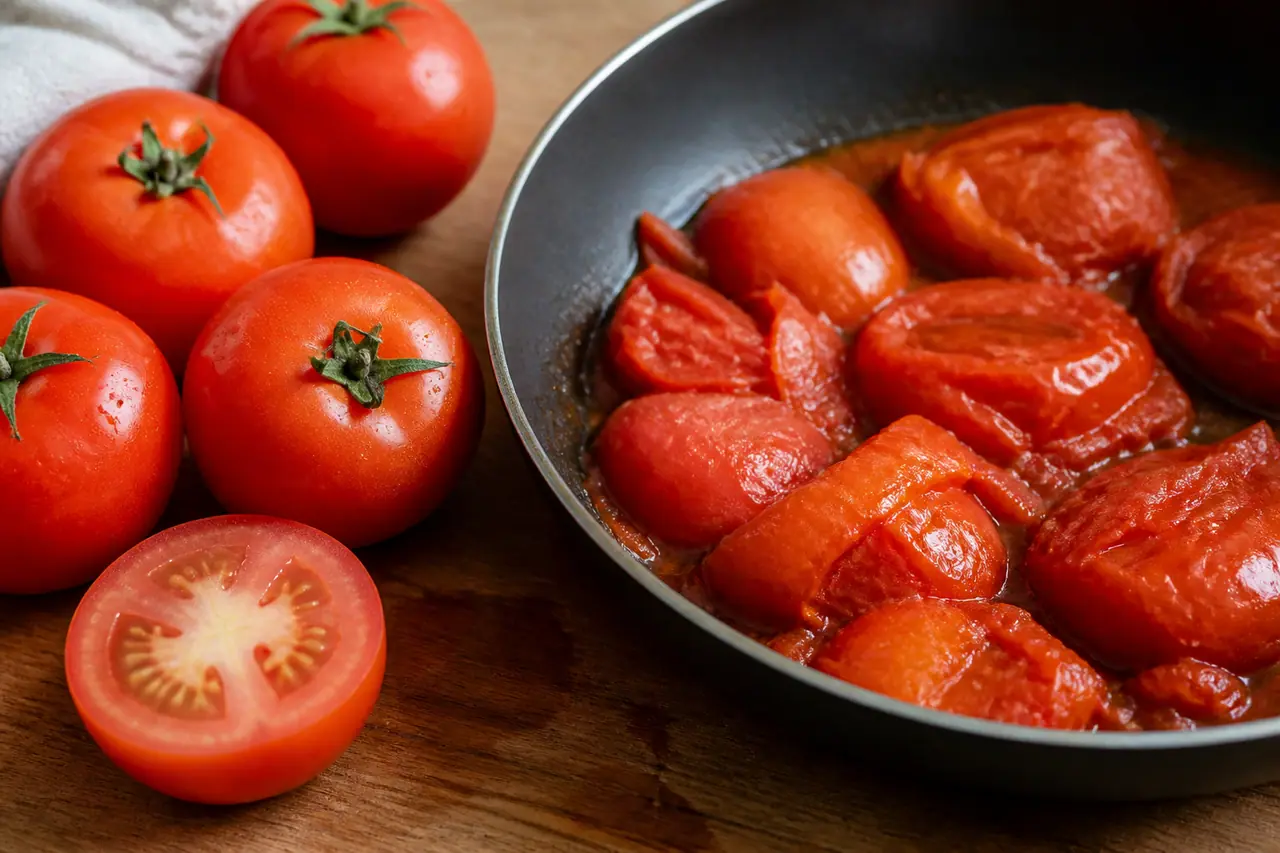
The tomato can look ready and still refuse to behave like ripe fruit. You slice it and the knife meets a firm centre. You cook it and water comes out before any sweetness appears. You wait another ten minutes and the pieces are softer around the edges but still strangely intact. This is not always a failure in your recipe. Some supermarket tomatoes are selected to survive handling and transport, so the outside colour arrives before the inside texture does. The fruit has been asked to travel well, not to make a perfect sauce the moment it reaches your stove.
That does not make them useless. It means the cooking plan needs to change. Use firm tomatoes where structure helps, give them time to soften before adding more liquid, or move them to a roast where heat can concentrate the water. The worst option is expecting an unripe tomato to turn into a glossy sauce on a short clock. A firm tomato can still be a good ingredient when the method respects its structure. It can hold a slice on toast, bring body to a roast tray and add a clean savoury note to a pan of beans.
Colour and softness do not always arrive together
Tomatoes can develop a red skin while the flesh remains firm and low in flavour. The varieties used for supermarket supply often need to handle stacking, travel and time on a display. That is a different job from becoming soft and fragrant on a kitchen counter. A tomato that is perfect for a sandwich slice may be disappointing as the only base for a quick sauce.
Cold storage makes the problem more noticeable. Chilling slows the changes that make a tomato taste ripe and can leave the flesh mealy when it comes back to room temperature. If I bring firm tomatoes home, I keep them out of the fridge while they are still whole. A cool, shaded counter is kinder than a cold shelf, unless the fruit is already overripe and needs slowing down. Letting the fruit warm again does not reverse every texture change, but it can bring back enough aroma to make a cooked topping worth saving.
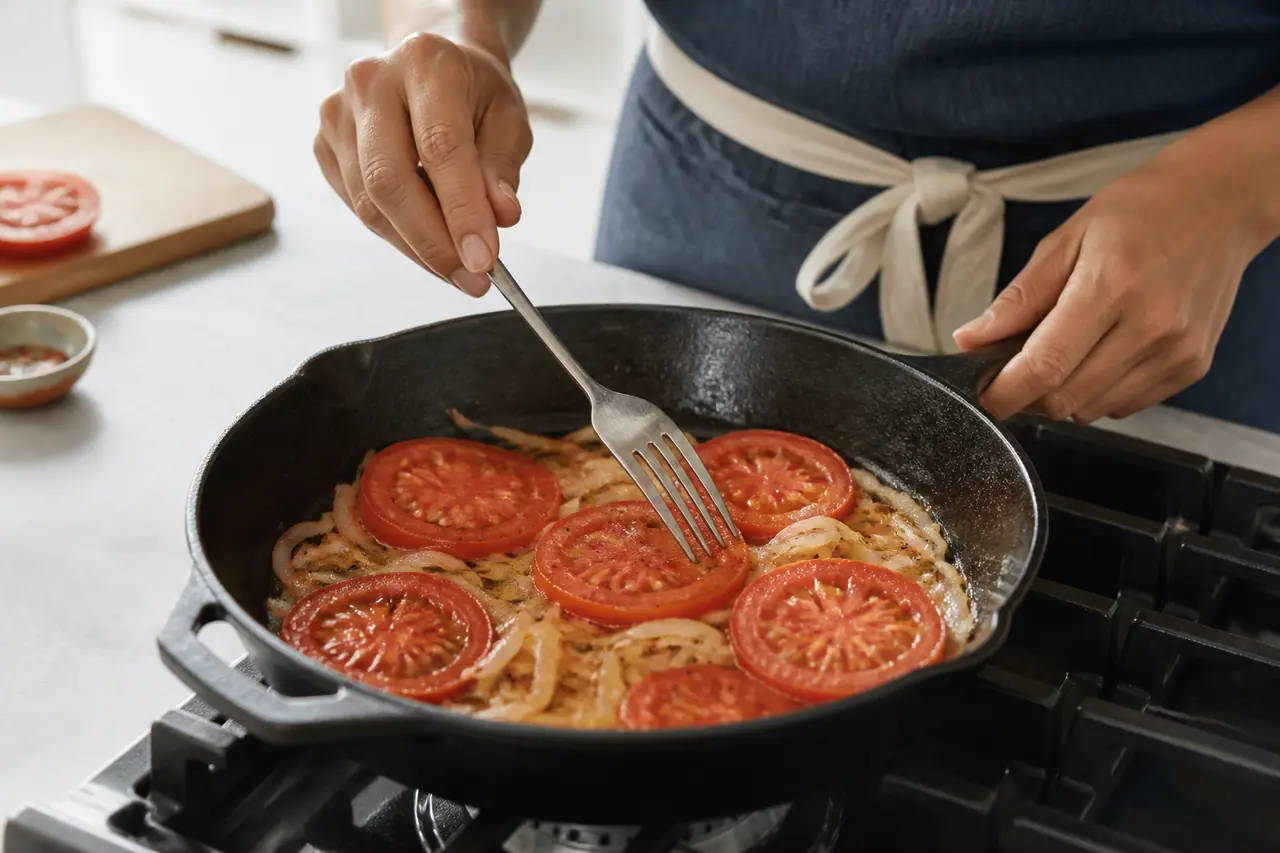
Three clues that the pan needs help
If the cut surface looks pale and the seeds are surrounded by a lot of clear liquid, expect a longer reduction. If the pieces keep their sharp corners after the onion base has softened, lower the heat and give them time before adding stock. If the smell stays green and grassy instead of turning sweet, the fruit is not ready to carry the dish on its own. None of these clues means you have to throw the tomatoes away.
Salt can draw water out, but it cannot create ripeness. High heat can char the edges, but it may leave the centre firm. A covered pan softens the pieces faster, yet it also traps the water you need to remove later. Decide whether the dinner needs tender chunks or concentrated sauce, then choose the heat and lid around that goal.
| Problem | Better move | Avoid |
|---|---|---|
| Firm but fragrant | Roast or saute in larger pieces | Mashing it too early |
| Red outside, pale inside | Cook slowly before adding liquid | Expecting a quick sauce |
| Very watery | Use a wide pan and reduce uncovered | Adding more stock |
| Mealy after chilling | Use in a cooked dish with strong aromatics | Serving it raw as the main event |
Source: Maren Ashby's tomato handling and pan test, 2026-01-12
Roasting is often the honest rescue
When fresh tomatoes will not soften properly in a skillet, I cut them into wedges, toss them with oil and salt, and roast them with onions or peppers. The oven gives the water a clear route out while the edges take on colour. A firm tomato becomes useful because it can hold its shape long enough to roast instead of collapsing into a thin puddle.
For sauce, cook the roasted pieces with garlic and a little stock, then blend only if the skins and seeds need smoothing. For a side dish, keep them whole and finish with vinegar or herbs. The same tomato that disappointed in a short pan sauce can be good when the cooking method gives its water and flesh different jobs.
The verdict
Some supermarket tomatoes never soften properly because they were chosen to travel well and may have been chilled before sale. Keep whole tomatoes out of the fridge, judge the inside rather than the skin, and give firm fruit a wide pan or a hot oven. If the tomato still lacks flavour, use it for structure and let paste, herbs, beans or tinned tomatoes carry the sauce.
Questions
Why are my tomatoes red but still hard?
Should tomatoes be stored in the fridge?
How do I soften hard tomatoes for sauce?
Can I eat firm supermarket tomatoes?
Ingredients in this guide
More guides
All guides →
How to choose green beans that still snap
Fresh green beans are smooth, bright and firm, with a clean snap and no swollen seed bumps. A flexible limp pod is usually a thirsty older pod, not a tender one.
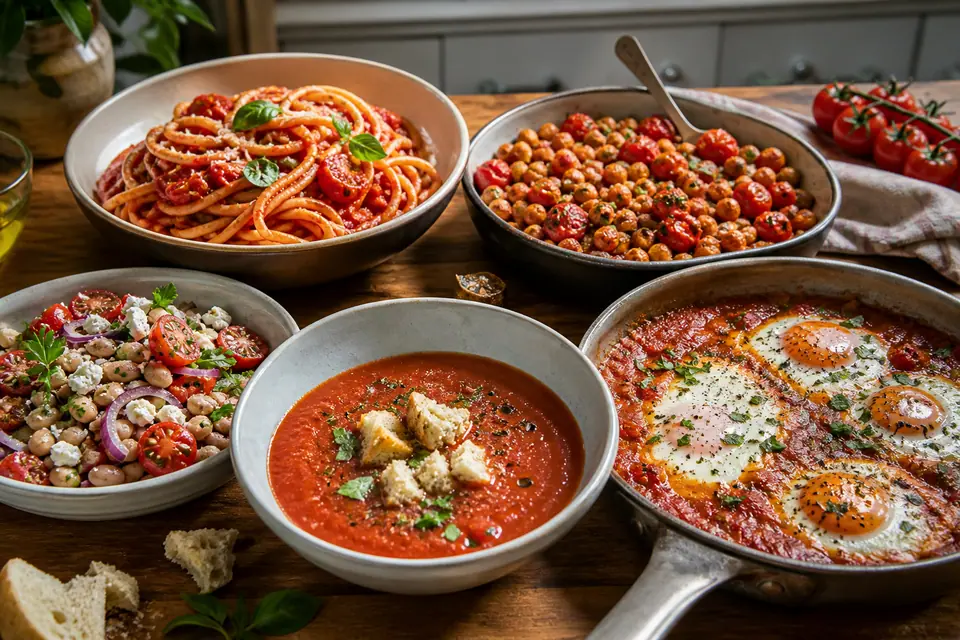
5 dinners for a glut of fresh tomatoes
Use a glut of fresh tomatoes in a wide-pan sauce, roast tray, tomato eggs, soup or a bread topping. Match the method to how ripe they are.
Firm vs extra-firm tofu: which crisps best?
Extra-firm tofu is the reliable choice for crisp edges and turning. Firm tofu can still work when you press it gently, use larger pieces and avoid overhandling.