Five dinners for the carton already open in the fridge
Passata can become a smooth sauce, a poaching base or a quick soup. These five dinners use one carton and ordinary cupboard ingredients.

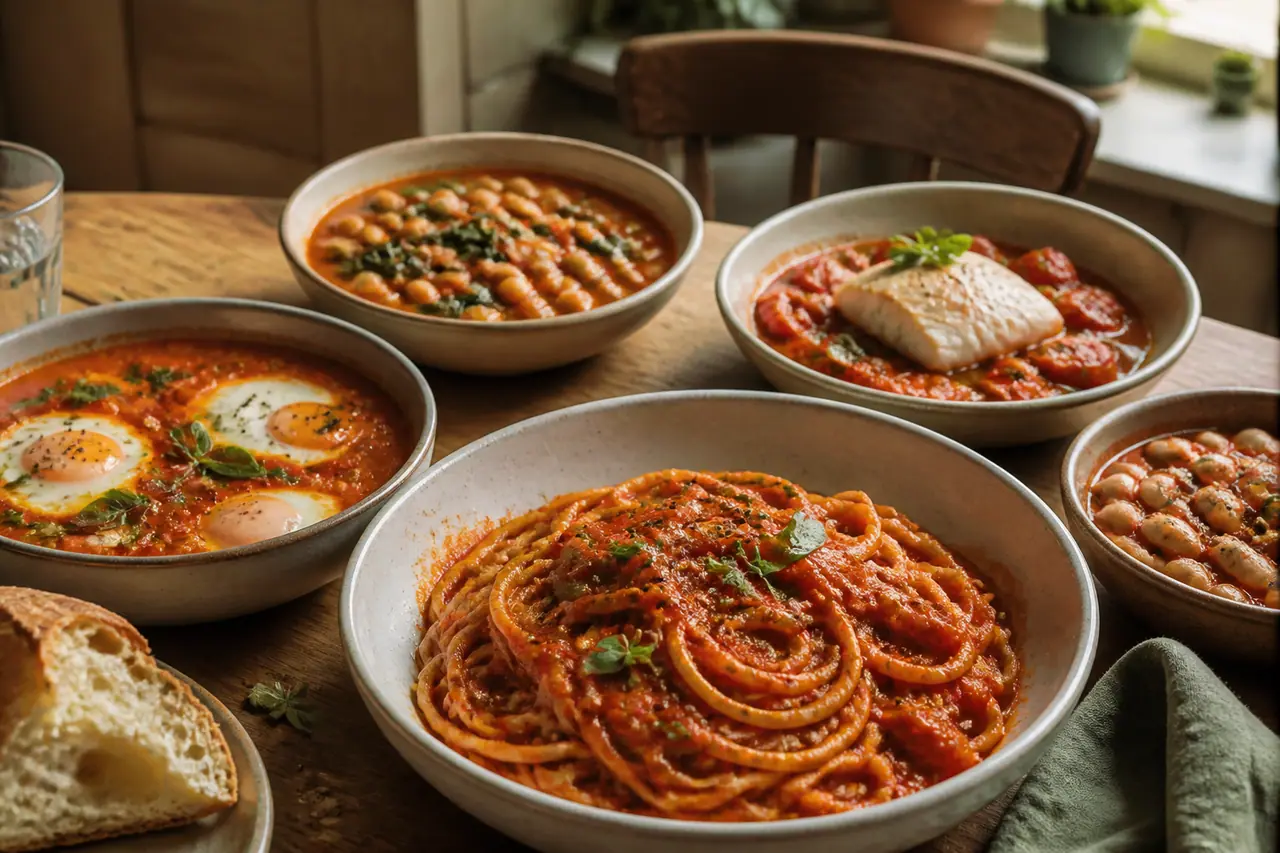
Passata is the carton I open when dinner needs to look more organised than it feels. It gives you a smooth tomato base without chopping, and it can move from soup to sauce to poaching liquid depending on what is in the fridge. I like it for the nights when the main ingredient is small: two eggs, a handful of beans, one fish fillet or the last cup of cooked chickpeas. The tomato gives each of them enough sauce to become a meal, while the wide pan does the work of making the carton taste cooked. It is especially good at turning one portion of something into two portions of dinner. A little fish becomes a pot of sauce, a few beans become a bowl with toast, and the last chickpeas stop looking like leftovers.
These five dinners are routes, not strict recipes. Start with onion, garlic and oil when you have them. Reduce the passata before adding water. Taste at the end, because a carton that needs salt will tell you more clearly after it has cooked.
1. Passata eggs with toast
Cook sliced onion and garlic in olive oil, add 400 g passata and simmer uncovered until thick enough to hold four wells. Crack in the eggs, cover and cook until the whites set. Finish with black pepper, herbs and toast. I use the widest pan that fits the number of eggs because each well needs room and the sauce needs evaporation. A small pan makes the eggs stack on top of each other and leaves the centre loose while the edges overcook. If you are cooking for one, use two eggs and reduce the sauce first rather than filling the pan with extra liquid.
The sauce needs to be thicker than you think before the eggs go in. Egg whites release a little water, and a thin base turns into soup around the edges. If the passata is watery, use a wide pan and give it ten extra minutes.
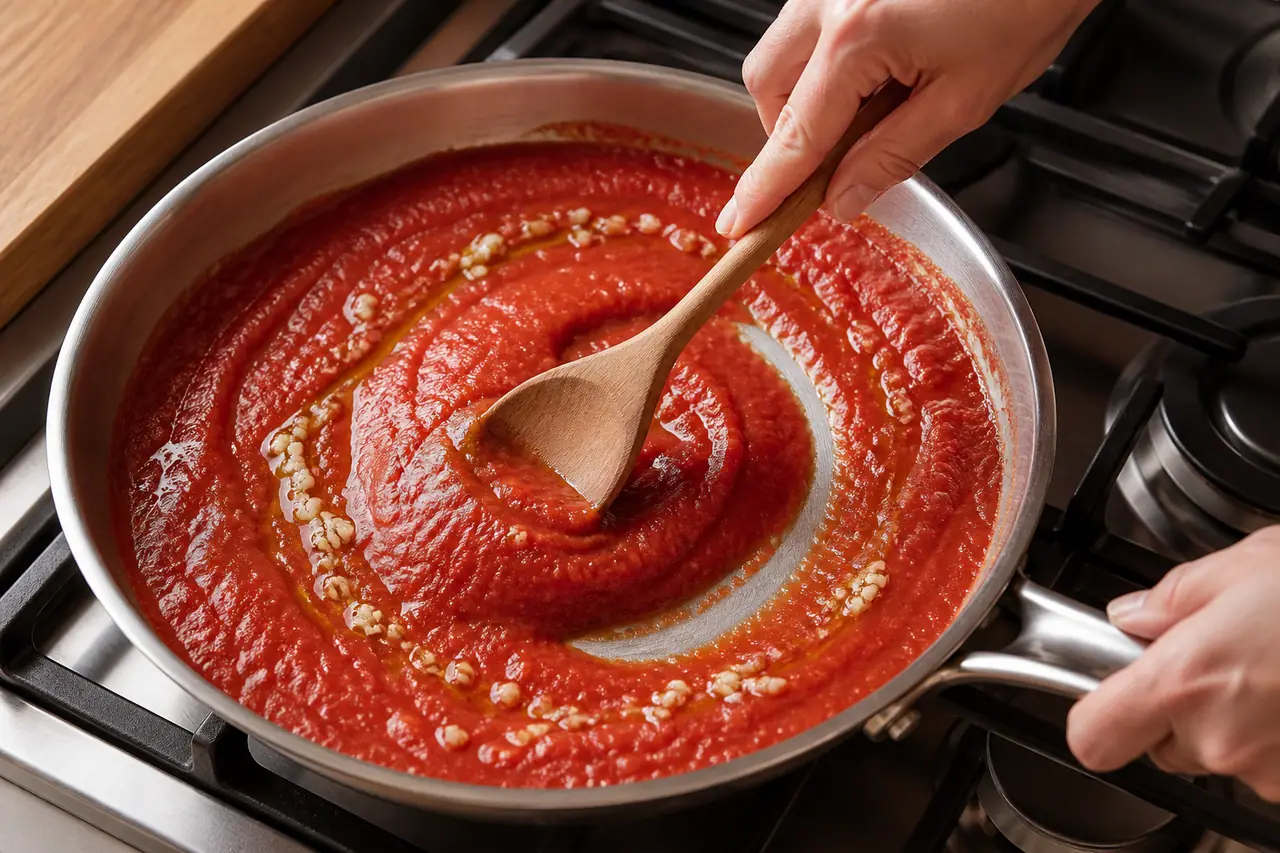
2. Smooth tomato pasta
While the pasta cooks, fry garlic and chilli in olive oil. Add passata, salt lightly and reduce uncovered. Toss the pasta through the sauce with a little cooking water. Add grated cheese, tuna or white beans if you need more substance. Keep the sauce a little looser than the final bowl, since the pasta will absorb it while you toss. I often turn off the heat before adding the noodles, then use the residual heat to bring everything together. That keeps the tomato from catching and gives the oil time to coat the strands. If the sauce tastes sharp, check the salt before adding another handful of herbs. A small adjustment at the end is easier to judge than a crowded pan at the start.
Do not add the whole mug of pasta water. Start with a tablespoon and toss. The water is there to help the sauce cling, not to return the liquid you spent fifteen minutes removing.
3. Chickpea and passata soup
Warm cumin and smoked paprika in oil, add passata, stock and chickpeas, then simmer for 20 minutes. Blend a cup of the soup and stir it back in. That thickens the broth while leaving enough chickpeas whole for a proper spoonful.
Lemon at the end keeps the soup from tasting heavy. Add it after the heat is off, then taste for salt. The full spiced chickpea soup gives the longer version and freezer notes.
4. Fish poached in passata
Reduce passata with garlic, fennel seeds and olives for ten minutes. Lower in thick white fish fillets, cover and cook gently until the centre flakes. Serve with bread, rice or potatoes. Cod, hake and pollock all work when the pieces are similar in thickness. I place the thickest part of each fillet toward the centre of the pan, where the heat is steady, and keep the thinner ends tucked into the sauce. The tomato should come halfway up the fish rather than cover it completely. That keeps the top from steaming into mush while the sauce stays hot enough to cook the middle.
Keep the sauce at a quiet simmer. A rolling boil shakes the fish apart and can leave the outside dry before the middle is ready. If using frozen fish, thaw it safely and pat it dry so it does not water down the pan. The fish is ready when a thin knife slips into the centre with little resistance and the flesh separates into moist flakes. I lift one fillet with a spoon rather than stirring the sauce around it. That protects the surface and leaves the tomato base clear enough to serve with bread. If the sauce has reduced too far, add a tablespoon of water before the fish goes in, not after it has started cooking.
5. White beans in tomato sauce
Cook onion, garlic and rosemary in olive oil. Add passata and two drained tins of white beans. Simmer until the sauce is thick and the beans are hot, then finish with lemon and more oil. Put a fried egg on top if the meal needs a little more weight.
Do not stir hard once the beans are hot. A wooden spoon dragged through the pan can split them and turn the sauce cloudy. Fold gently, or shake the pan by its handle. Serve with toast or the yogurt flatbread.
The base that makes all five work
Use a wide pan. Soften the onion before the tomato goes in. Add garlic later. Simmer uncovered until the passata coats a spoon. Only then add stock, eggs, fish, beans or pasta. That one habit prevents the watery dinners that make a quick sauce feel like a failed project.
If the carton tastes flat, read why passata needs reduction. If you have crushed tomatoes instead, compare the two forms before adding extra liquid. The texture starts in the pack.
| You have | Make | Time after prep |
|---|---|---|
| Eggs and bread | Passata eggs | 20 minutes |
| Pasta and garlic | Smooth tomato pasta | 15 minutes |
| Chickpeas and stock | Tomato chickpea soup | 25 minutes |
| White fish and olives | Poached fish | 20 minutes |
| White beans and herbs | Beans in tomato sauce | 20 minutes |
Source: Maren Ashby's kitchen timings, 2026-08-27
How to save the rest
If your carton has leftovers, follow the label for fridge timing and move it to a covered container if the package does not reseal well. Freeze 150 g portions for soup, pasta or beans. The guide to storing passata after opening explains why smaller portions get used more often.
One carton does not need five different shopping trips. It needs five possible landings. Choose the dinner that matches the food in front of you and let the passata do the quiet work of making it a sauce.
Questions
Can I use passata straight from the carton?
What can I add to passata to make a meal?
Can I use passata in soup?
How do I stop passata from splitting?
More guides
All guides →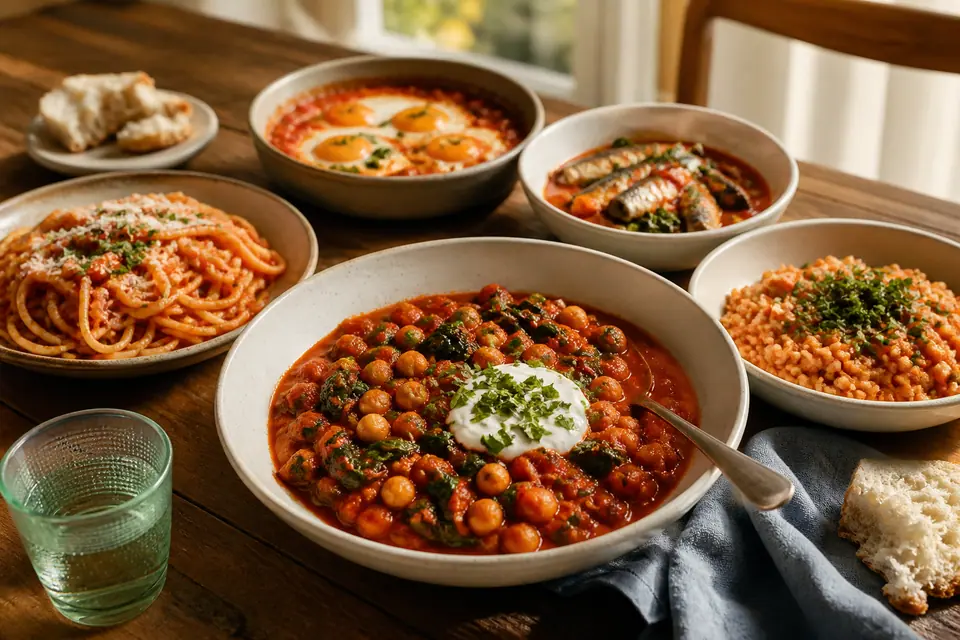
5 weeknight dinners to make with tinned tomatoes
One tin of tomatoes can take dinner in five different directions. These are the ones I use when the cupboard is fuller than the fridge.
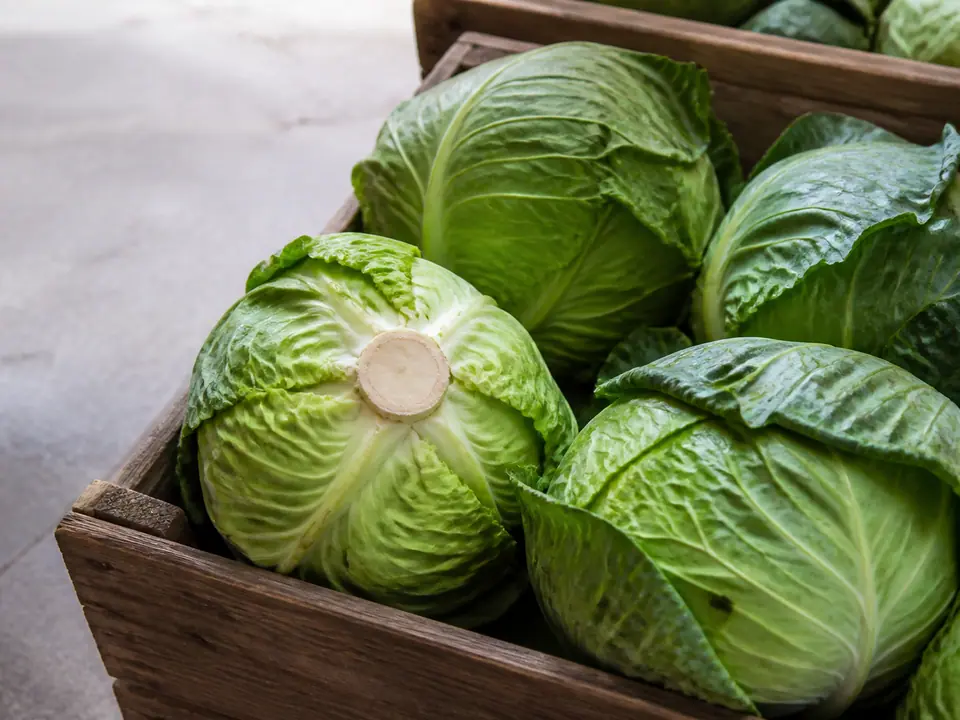
How to choose a cabbage that will stay crisp
A crisp cabbage feels dense, has tightly packed leaves and a dry cut base. The shop test takes less time than rescuing a wilted half later.
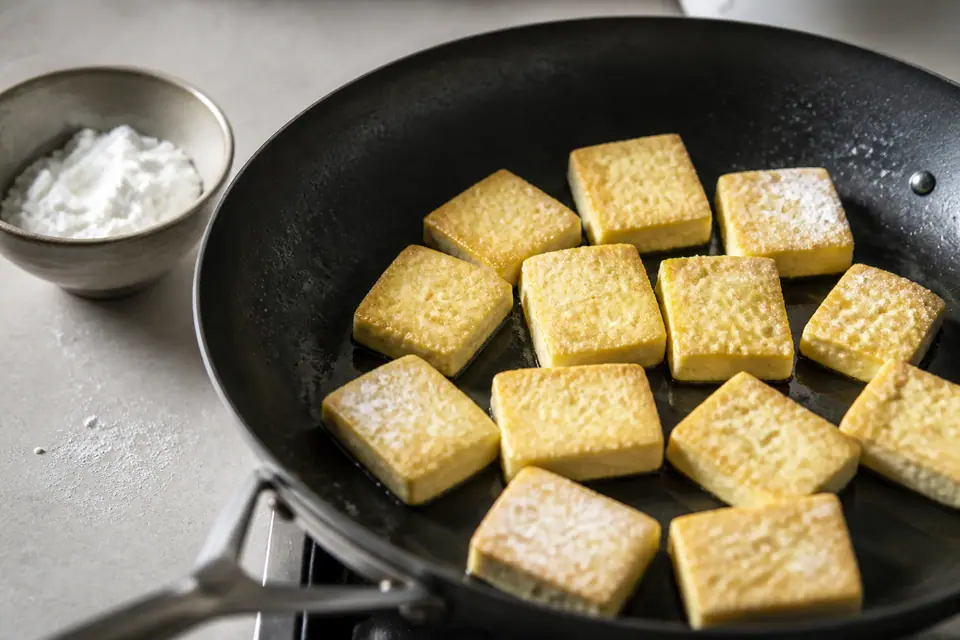
Cornstarch on tofu: how much coating is enough
A thin, even dusting of cornstarch gives tofu a crisp shell. Too much leaves powdery patches and makes the coating fall off in the pan.